
If you’re someone who struggles with health anxiety, you’ve probably caught yourself googling “Do I have type 1 or type 2 diabetes quiz” after being in and out of the bathroom five times in two hours. Frequent urination is a major symptom of diabetes. If you’re wondering what’s going on with your body, taking a quiz is a first step in measuring your risk for diabetes. It’s quick — often less than two minutes — and helps you better understand your symptoms. It can’t replace a medical diagnosis, but it can help detect potential blood sugar impairment, helping you catch and address them early.
How Type 1 Diabetes Differs From Type 2 Diabetes

Type 1 and Type 2 diabetes may look similar at first glance, but they’re distinct in many ways.
Type 1 diabetes is an autoimmune disease that occurs when your immune system mistakenly attacks the cells that produce insulin, a hormone that regulates your blood sugar levels. It’s like a case of mistaken identity, where your body’s defense system sees the insulin-producing cells as a threat. As these cells are destroyed, it ultimately disrupts your body’s ability to regulate blood sugar. Type 1 diabetes often affects kids or young adults, and once diagnosed, they require insulin therapy immediately.
Type 2 diabetes is a lifelong condition associated with poor blood sugar control. It develops gradually and is largely affected by your lifestyle and genetic factors. It may begin as mild insulin resistance and progress to prediabetes and eventually full-blown diabetes.
Type 1 and Type 2 diabetes have overlapping symptoms. If you ask, “Do I have Type 1 or 2 diabetes?” — it’s hard to tell unless you get a comprehensive diagnosis to determine the type of diabetes you have.
Symptoms to Watch Out For
What are the warning signs of Type 1 diabetes? How about Type 2? Both share some common symptoms that include:
-
- Increased hunger
- Frequent urination
- Increased thirst
- Blurred vision
- Extreme fatigue
- Unexplained weight loss
- Slow-healing wounds or frequent infections
A Type 1 or Type 2 diabetes quiz may help measure your risk for either condition. It can’t replace a clinical diagnosis, but it helps you better understand the signs your body may be sending in case you’ve developed a symptom that may indicate diabetes.
Related Quizzes and Tools You Can Try
Diabetes quizzes help screen for early signs of sugar imbalance. Below are some tests you can try taking.
This 1-minute prediabetes test, developed by the CDC, asks about your age, activity level, weight, family history, and other factors that subtly increase your risk for prediabetes.
Prediabetes is a condition wherein your HbA1c level is between 5.7% and 6.4% — higher than the normal — but below the diabetes range of 6.5%. It doesn’t manifest any symptoms, but some people may notice changes, such as skin tags, darkened skin in the armpit and neck, and minor vision changes. Prediabetes can develop into diabetes within 3-5 years if left undetected or untreated.
Type 1 diabetes is usually diagnosed in young adults and children, but it can appear at any age, even if it doesn’t run in the family or you’re living a healthy lifestyle. Viral infections and other autoimmune conditions, such as celiac disease, can contribute to the risk.
This Type 1 diabetes risk test, provided by Sanofi, consists of five questions that ask about conditions you may have inherited from your parents, your age, and whether you have a history of autoimmune disease and viral infections. Take the test to find out if you’re at risk of Type 1 diabetes.
This less than 2-minute diabetes test by the ADA is similar to the CDC’s prediabetes test, except it measures your likelihood of developing Type 2 diabetes. After you complete the test, your risk is rated on a scale of 0 to 10, with 10 indicating the highest likelihood. If your risk is high, you should consult your doctor and confirm if you have prediabetes or diabetes.
If you live in the U.K., this risk tool, developed by the University Hospitals of Leicester NHS Trust, Diabetes U.K., and the University of Leicester, can help you assess your risk of developing diabetes.
It’s a brief diabetes quiz consisting of seven questions that ask about your age, gender, family history, and waist circumference. It also automatically calculates your BMI after inputting your height and weight. At the end of the test, your risk is evaluated on a scale of 0 to 47. Here’s how your risk is categorized.
-
- Low risk: 0-6
- Medium risk: 7-15
- High risk: 16-24
- Very high risk: 25-47
It also explains your risk rating, including factors you can change to reduce the score and lower the risk.
The Defeat Diabetes Foundation is a U.S.-based nonprofit organization that provides educational resources to help people prevent, manage, and achieve remission from Type 2 diabetes. This screening test compiles symptom-related questions to gauge your susceptibility to developing diabetes. After completing the questions, it provides a score indicating a low, medium, or high risk for diabetes.
Ubie Health is a global health tech company that utilizes AI to provide personalized insights and health suggestions based on your symptom inputs. Its Ubie Symptom Checker is an interactive, AI-driven quiz that offers a symptom check test to determine if you’re predisposed to Type 1 or Type 2 diabetes. It’s more comprehensive than the other risk tests and takes approximately five minutes to complete.
After completing the questions, it will suggest the next action to take, such as consulting a doctor for a checkup. It also enumerates the most likely diseases that match the symptoms you’re experiencing.
For instance, if you have a headache, it will list migraine, adjustment disorder, or premenstrual syndrome (PMS) as possible causes. You can use this tool not only to detect early signs of diabetes, but also for other conditions as well.
Why Take a Self-Assessment Quiz for Type 1 or Type 2 Diabetes

Taking a Type 1 or Type 2 diabetes risk test is a useful option if you’re unable to visit your doctor due to time constraints or other responsibilities. It can help you:
-
- Determine if your symptoms point toward Type 1 or Type 2 diabetes: Although these conditions manifest identical signs, Type 1 is generally easier to detect because its symptoms are often more pronounced and develop rapidly.
- Get insights into your health: Diabetes quizzes aren’t a medical diagnosis, but they can help you get a glimpse of your overall health and potential issues that may arise later. Take one of these short risk assessment tools if you suspect your symptoms may be diabetes-related.
- Get low-stress feedback for free: These diabetes quizzes are free. In five minutes or less, you can get valuable health feedback without needing to visit your doctor. If the results indicate a high risk, schedule a lab test with your doctor to confirm whether you have a chronic condition.
What If You’re at Risk for Prediabetes or Diabetes?
If your diabetes quiz returns a high-risk result, take it as a sign to reassess your lifestyle and identify habits or behaviors that may be contributing to the condition. Is it due to a sedentary lifestyle or a high-sugar diet? A poor lifestyle is often linked with chronic illnesses.
Prediabetes isn’t diabetes — at least not yet. However, if you have higher-than-normal blood sugar levels, it’s a sign that you’re insulin-resistant and your blood sugar regulation is impaired. The good news is that prediabetes is reversible through adjustments to your diet, incorporating exercise into your routine, and getting sufficient sleep. In some cases, medications like metformin may be prescribed.
Remember, the questions and answers on a diabetes quiz don’t confirm a diagnosis. Therefore, it’s still advisable to consult your doctor and undergo an HbA1c test to accurately measure your blood sugar levels.
Articles you may also be interested in

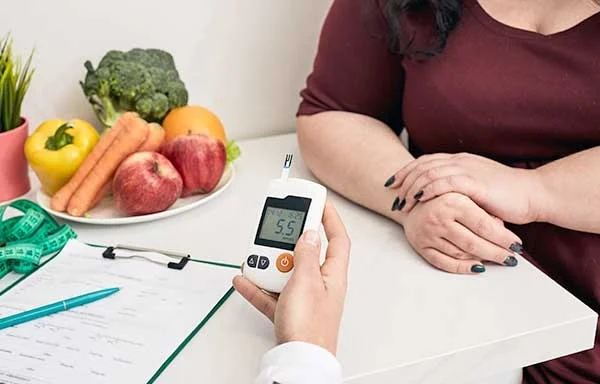


A Type 1 or Type 2 Diabetes Quiz Is a Useful Tool
Some people want to feel more in control of their body by being aware of what’s going on inside it — even if it’s bad news. So rather than wondering, “Do I have Type 1 or Type 2 diabetes?” take a quiz to analyze your risk for chronic high blood sugar if you don’t have time to visit your doctor for a lab test.
If you get a “high risk” result, see your doctor for some blood work to confirm if you do have prediabetes or diabetes. They can create a personalized treatment plan, whether that includes lifestyle changes to reverse prediabetes or prescription medications to manage diabetes.
A diabetes quiz can’t replace a clinical diagnosis, but it can hint at what’s happening inside your body. You can then use that information to take action and improve your well-being.


