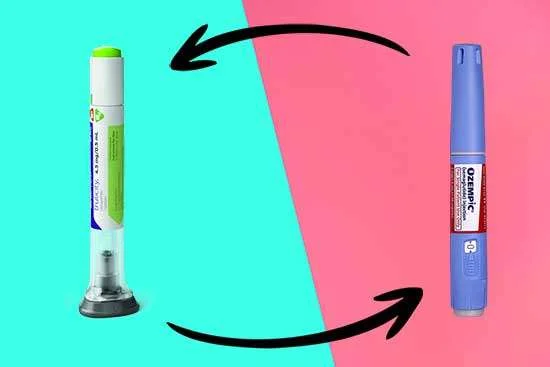
If you’re considering Farxiga vs. Ozempic for type 2 diabetes, you’ve probably already discovered that choosing between these medications can feel overwhelming when you’re managing your health budget. Both drugs can help lower blood sugar levels and provide heart protection, but they work in different ways and have distinct benefits that may make one more suitable for your specific situation.
What Are Farxiga and Ozempic?
Dapagliflozin (Farxiga) and semaglutide (Ozempic) are both medications used to treat type 2 diabetes and help lower the risk of heart problems in adults with heart disease, but they belong to different medication classes. Knowing exactly how each medication works will help you have a more productive conversation with your doctor about which one fits your needs.
-
- Farxiga (dapagliflozin): An oral medication from the sodium-glucose cotransporter 2 (SGLT2) inhibitor class, taken by mouth once daily
- Ozempic (semaglutide): A glucagon-like peptide-1 (GLP-1) receptor agonist given as a subcutaneous (under the skin) injection once weekly
Dapagliflozin is available in both brand-name and generic forms, whereas semaglutide is only available as a brand-name medication, which can significantly impact the cost when you’re budgeting for your health.
How These Medications Lower Blood Sugar Levels
Farxiga and Ozempic both control blood sugar, but they tackle the problem from completely different angles in your body.
Farxiga’s Approach to Blood Sugar Control
Farxiga helps control blood sugar by removing excess sugar from the body through the kidneys. Normally, the kidneys filter sugar from the blood but then reabsorb it back into the body. Farxiga blocks this reabsorption, causing sugar to be flushed out through urine instead. This process lowers blood sugar levels without requiring the body to produce more insulin.
Although Farxiga primarily removes glucose (sugar), sodium (salt) is also affected. Since both sodium and glucose are osmotically active molecules, they draw water into the urine. This pulls extra water out of the bloodstream, leading to increased urination (a diuretic effect) and a reduction in fluid buildup in the body. This effect is part of why Farxiga is beneficial for people with heart failure and kidney disease.
Ozempic’s Approach to Blood Sugar Control
Ozempic enhances insulin secretion and reduces appetite, working through multiple pathways to improve blood sugar control. Ozempic slows down how quickly food leaves the stomach, helping people feel full longer and reducing the urge to eat. This mechanism not only supports blood sugar control but also leads to greater weight loss compared to Farxiga.
Blood Sugar Control Effectiveness Comparison
Comparative studies and meta-analyses have shown that Ozempic generally results in greater reductions in HbA1c compared to SGLT2 inhibitors like Farxiga. On average, Ozempic 1 mg lowers HbA1c by about 1%-1.5%, while Farxiga 10 mg lowers it by about 0.7%-1%.
Typical HbA1c reductions:
- Farxiga: It lowered hemoglobin A1c (A1C) level by an average of 0.9% after 24 weeks of treatment.
- Ozempic: Studies show reductions of 1.4%-1.6% in patients treated for 30 weeks.
What is HbA1c?
A1C is a measurement that shows your average blood sugar levels over the past 2 to 3 months. The ADA recommends an A1C goal of less than 7% for most adults. Lower HbA1c values indicate better long-term blood sugar control, which can be a game-changer for your overall diabetes management.
Weight Loss Potential with Each Medication
Looking into semaglutide beyond type 2 diabetes? Weight loss effects are categorized as moderate with Farxiga. In clinical trials, it reduced participants’ weight by 2.7 kg (about 6 lbs) when used as a monotherapy for 24 weeks. When combined with metformin XR, it reduced weight by 3.3 kg (roughly 7.3 lbs).
Meanwhile, recent real-world evidence reports an average weight loss of 14.6 kg — about 14.1% of body weight — after one year with semaglutide 2.4 mg (the same active ingredient as Ozempic), which can help you set realistic expectations while remembering that individual results vary.
Although Ozempic does not directly impact fluid balance like Farxiga, it benefits heart health by promoting weight loss and reducing inflammation. Obesity is a major risk factor for cardiovascular diseases, including coronary artery disease, heart failure, and stroke.
Heart and Kidney Protection Benefits

Both medications offer important cardiovascular benefits beyond blood sugar control, but they focus on different aspects of heart health. Recent research shows that a large-scale network meta-analysis of 143,296 participants with type 2 diabetes found SGLT2 inhibitors like Farxiga offer stronger protection against heart failure and kidney outcomes, while GLP-1 receptor agonists like Ozempic are more effective at reducing heart attacks and strokes — helpful context as you and your clinician align treatment with your cardiovascular priorities.
Heart Failure and Kidney Protection
Farxiga can help lower the risk of serious complications, hospitalization, and death in certain adults with heart failure or chronic kidney disease (CKD). Research shows Farxiga has demonstrated greater benefits in reducing the risk of heart failure and is considered a first-line option for heart failure prevention in people with type 2 diabetes.
Farxiga can reduce the risk of severe kidney problems, heart-related deaths, and hospital stays for heart failure in adults with chronic kidney disease. Farxiga is also approved for adults with heart failure, helping to lower the chances of heart-related deaths and hospital visits for heart issues. In adults with type 2 diabetes who have existing heart disease or multiple heart risk factors, Farxiga can reduce the risk of hospital visits due to heart failure.
Cardiovascular Disease Protection
Ozempic is proven to lower the risk of heart attack, stroke, and death due to heart problems in adults with type 2 diabetes and heart disease. Medical professionals often prefer Ozempic over Farxiga for patients at higher risk of stroke, and it has strong evidence for reducing major adverse cardiovascular events.
Side Effects and Safety Considerations
Let’s break down the side effects so you know exactly what you might experience before making your decision.
Farxiga Side Effects
Because these medications work through entirely different mechanisms, they each come with their own unique set of side effects. Farxiga increases the amount of sugar in the urine, which can create an environment for infections to develop. This may lead to genital yeast infections and urinary tract infections (UTIs), with the most serious complications being urosepsis – a body-wide infection (sepsis) that starts in the urinary tract and can spread throughout the body.
-
- Urinary tract infections: More frequent due to sugar in urine
- Genital yeast infections: Especially common in women
- Increased urination: Part of how the medication works
- Dehydration: Can cause dizziness, fainting, lightheadedness, or weakness, especially when you stand up
Ozempic Side Effects
The most common side effects of Ozempic may include nausea, vomiting, diarrhea, stomach (abdominal) pain, and constipation. Common side effects include nausea, vomiting, diarrhea, and abdominal pain, and it should be used with caution in patients with a history of pancreatitis.
These gastrointestinal symptoms may limit tolerability for some patients but often improve over time as your body adjusts to the medication. Additionally, if you’re considering Ozempic, staying consistent can be challenging when side effects flare — recent research shows only 32.48% of patients achieve optimal adherence, and those who are not adherent often have higher BMI and HbA1c. If this is affecting your routine, consider a slower titration plan, meal timing adjustments, and check-ins with your prescriber to improve tolerability while maintaining your treatment plan.
Cost Comparison and Insurance Coverage
These medications aren’t cheap, and the costs add up quickly when you’re already stretching your healthcare dollars. Dapagliflozin is available in both brand-name and generic forms, whereas semaglutide is only available as a brand-name medication, making Farxiga potentially more affordable if generic options are covered by your insurance. The average retail cost of Farxiga in local pharmacies is $708, whereas Ozempic costs $1,203.
For Americans seeking more affordable options, services like Buy Canadian Insulin can provide access to both medications at significantly reduced costs compared to U.S. pharmacies. Farxiga is available at BCI for $119 and Ozempic for $329.95, offering significant savings for those paying out of pocket for prescriptions. Ozempic and Farxiga can be purchased from Canada at prices up to 90% lower than U.S. retail.
Making the Right Choice for Your Diabetes Management
Consider Ozempic if you:
-
- Want maximum blood sugar control and weight loss
- Can manage weekly injections
- Have a history of heart attack or stroke risk
- Don’t have significant gastrointestinal sensitivity
Consider Farxiga if you:
-
- Prefer daily pills over injections
- Have heart failure or kidney disease concerns
- Experience significant nausea with GLP-1 medications
- Want a potentially more affordable generic option
This is complex territory, so bring these questions to your doctor, who knows your medical history and can help you make the right call.
Managing Long-Term Buy Canadian Insulin Treatment
When you’re planning for long-term diabetes management with either Farxiga or Ozempic, the ongoing costs can feel overwhelming when you’re budgeting for your health. Both medications are typically taken for years rather than months, making affordability a crucial consideration in your treatment plan.
Several strategies can help make these essential medications more accessible. Generic dapagliflozin may become available for Farxiga, potentially reducing costs over time. However, Ozempic remains brand-name only, which means higher prices for the foreseeable future.
The ongoing expense of diabetes medications is a real burden — one that many patients struggle with month after month. For Americans seeking reliable access to these medications at more affordable prices, Buy Canadian Insulin offers verified pharmacy partnerships that can provide significant savings. The good news is that you have options for accessing both Farxiga and Ozempic through licensed Canadian pharmacies with the same safety standards and quality you’d expect.
With Buy Canadian Insulin, you’ll spend less time stressing about how to afford your medication and more time actually managing your diabetes effectively.
Frequently Asked Questions
Articles you may also be interested in