
Managing diabetes can feel like studying for a medical degree. Even if you don’t like it, you’re suddenly learning terms like short- or intermediate-acting insulin, basal doses, and blood glucose targets. It can be overwhelming, especially when your doctor hands you a prescription and says, “This will help manage your glucose between meals and overnight,” which describes what an intermediate-acting insulin does. If, prior to this, you don’t have any clue about the different types of insulin and what intermediate-acting insulin specifically is, this article will help you understand where it fits into your daily life.
What Is Intermediate-acting Insulin?

According to the CDC, there are seven types of insulin, and they are:
-
- Rapid-acting
- Rapid-acting inhaler
- Regular- or short-acting
- Intermediate-acting
- Long-acting
- Ultra-long acting
- Premixed
By the names alone, you can immediately tell these insulin types are categorized based on how quickly they begin working, when they peak, and how long their effects last.
In the mid-range of these types is intermediate-acting insulin. What does it do, and what does “intermediate-acting” mean? Intermediate-acting insulin is a type of insulin that stabilizes your blood sugar levels for longer than short-acting insulin but not as long as long-acting types. Intermediate-acting insulin sits in the middle.
If short-acting insulin is like a charger that powers your phone’s battery for a couple of hours, long-acting insulin is like a high-capacity power bank that can juice up your phone all day and night. Intermediate-acting insulin is somewhere in between, functioning like a medium-sized battery to power up your phone once the battery runs out.
How Does Intermediate-acting Insulin Work?
Intermediate-acting insulin is a synthesized human insulin that works just like the native insulin produced by your pancreas. Once injected, NPH insulin signals your body’s cells to take in more sugar from the bloodstream to store or use for energy, which reduces the amount of sugar circulating in your blood.
People with diabetes don’t produce enough insulin to facilitate glucose uptake by cells. But insulin products like intermediate-acting types can help fill this gap in normal functions.
Other Names of Intermediate-acting Insulin
Doctors and patients use various terms for intermediate-acting insulin, including:
-
- Basal insulin
- Neutral protamine Hagedorn (NPH) insulin
- Insulin isophane
- Insulin isophane human
- Insulin isophane NPH
- Cloudy insulin (referring to its cloudy appearance)
- Half-day insulin (referring to its half-day coverage)
- Insulin lispro protamine
- Medium-acting insulin
The two most commonly used synonyms for intermediate-acting insulin are insulin isophane and NPH insulin.
One interesting fact about NPH insulin is that it’s included in WHO’s Model List of Essential Medicines (EML). What does this mean? NPH insulin is a crucial drug that should be available, have enough supply, and be accessible for people who need it at all times.
Onset, Peak, and Duration
Intermediate-acting insulin is a key part of many diabetes patients’ treatment plans. It’s often combined with rapid- or short-acting insulin to provide longer blood sugar control coverage.
According to the CDC, the onset of intermediate-acting insulin is within 2-4 hours, meaning it starts working at least a couple of hours after being injected under the skin. Meanwhile, the peak of intermediate-acting insulin is seen in 4-12 hours after administration. The drug is most potent in lowering blood sugar levels during this time. Its duration of action typically lasts 12-18 hours.
Intermediate-acting insulin can only provide half a day or overnight coverage. That’s why it’s regularly used with rapid- or short-acting insulin, which controls post-meal blood glucose.
Brand Names of Intermediate-acting Insulin
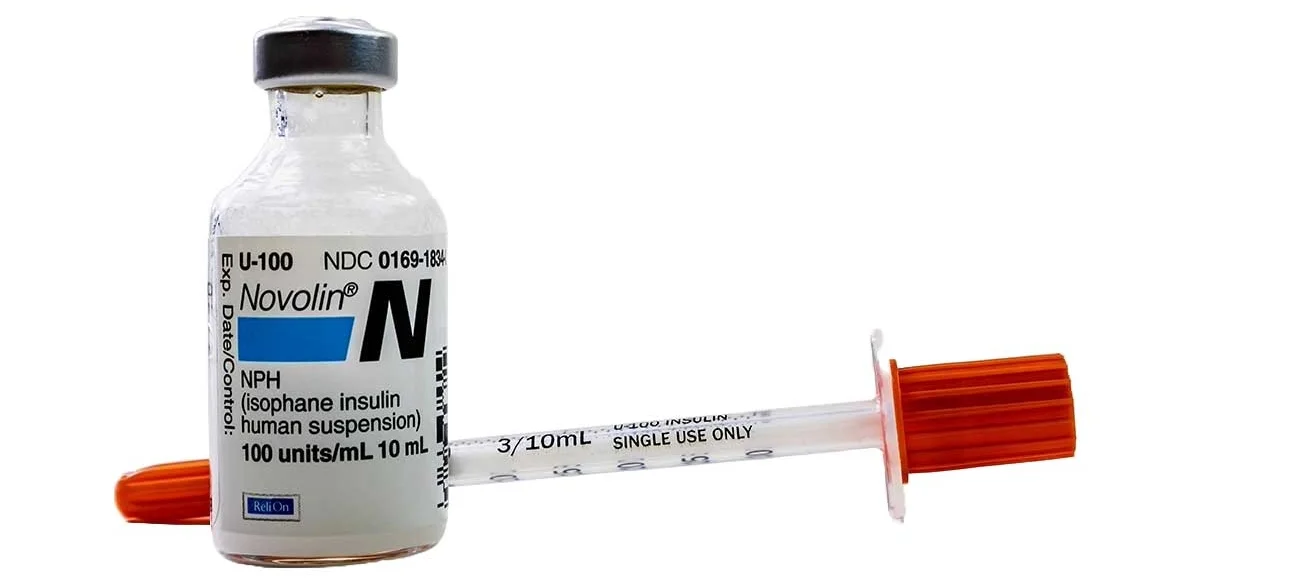
NPH insulin typically comes in concentrations of 100 units/mL (U-100) — the standard U.S. strength. However, it comes in different formulas. Some intermediate-acting insulin examples here in the U.S. include:
NPH insulin is marketed under several brand names, including:
1. Humulin N
Humulin N contains insulin isophane human and was approved by the FDA in 1982 for treating diabetes in children and adults. It’s manufactured by Eli Lilly and available in vials and prefilled pens (Humulin N KwikPen).
2. Novolin N
Novolin N is another intermediate-acting insulin brand approved by the FDA in 1991 to improve blood sugar control in children and adults with diabetes. It’s manufactured by Novo Nordisk, and formulas are available in vials and prefilled pens (Novolin N FlexPen).
3. Insulatard
Insulatard isn’t available in the U.S., but it’s widely used in the U.K., Canada, Australia, and Asia, and manufactured by Novo Nordisk. It’s available in vials, cartridges, and prefilled pens (InnoLet or FlexPen).
Some brand names of intermediate-acting insulin used outside of the U.S. are:
-
- Insuman Basal
- Humulin I
- Actraphane
- Ronulin N
- Insugen N
- Lupisulin N
4. Premixed Insulins with NPH
Some companies produce premixed insulin, combining short- or rapid-acting insulin with intermediate-acting insulin in one injection. Some patients find this more convenient than the two injections of separate rapid-acting and intermediate-acting insulin.
Some examples of premixed insulins with NPH are:
-
- Humulin 70/30 contains 30% regular and 70% NPH insulin.
- Novolin 70/30: Combines 30% short-acting insulin and 70% NPH insulin.
- Humalog Mix 75/25: Contains 25% of rapid-acting insulin lispro plus 75% of intermediate-acting insulin lispro protamine.
Standard Recommended Dose
Like other types of insulin, the dose for intermediate-acting is highly individualized based on factors like your body weight, level of physical activity, and blood sugar control needs.
According to the American Diabetes Association, the general guideline for an intermediate-acting insulin dose is 0.4 to 1.0 units/kg/day for Type 1 diabetes and 0.1 to 0.2 units/kg/day for those with Type 2 diabetes.
Doctors may titrate NPH insulin depending on the patient’s needs. Since intermediate-acting insulin lasts only half a day, the recommended regimen is to inject NPH insulin twice daily, often in the morning and evening.
Common Side Effects

Using intermediate-acting insulin for managing diabetes can cause side effects that include:
-
- Peripheral edema or swelling in the lower part of the body due to fluid buildup
- Low blood sugar
- Hypokalemia or low potassium levels
- Lipodystrophy
- Weight gain
Weight gain is a common concern among these side effects because it may worsen insulin resistance for some patients.
In a study published in the National Library of Medicine, 192 diabetes patients on insulin therapy experienced a weight increase of up to 3%. This weight gain required them to increase insulin usage by 23% within the first year of treatment.
Lifestyle changes can help negate the risk of weight gain. As long as you pick the right types of food to eat and exercise regularly, you can maintain a healthy body mass index.
Articles you may also be interested in




Intermediate-acting Insulin Can Help Manage Diabetes
Each type of insulin plays a specific role in managing diabetes. Intermediate-acting insulin provides approximately 12 hours of blood sugar control, preventing dangerous glucose spikes between meals or overnight. It’s often combined with short- or rapid-acting insulin for broader glucose control coverage.
NPH insulin is available in many brand names that vary in dosage forms and costs. Its dose is highly personalized. Your doctor will determine the right dose for you based on health markers like your weight and the level of glucose control you need. Work with your doctor to effectively manage your blood sugar levels.
Frequently Asked Questions
Original Publish Date: 12/12/2023 – Updated 6/12/2025


