
If you kicked off the year with a resolution to lose weight but now find yourself midway through the year without any progress, you might be thinking it’s time to consider weight loss medications. Mounjaro and phentermine are two options, but which one is more effective? In this Mounjaro vs. phentermine treatment comparison, discover which is better for weight loss, including their potential side effects.
What Are Mounjaro and Phentermine?
Mounjaro and phentermine are medications that promote weight loss. Although prescribed for the same purpose, they differ in several ways, including how they work and the conditions for which they’re medically approved.
Mounjaro contains tirzepatide as its base formula and belongs to a class of medications called dual agonists. It activates and binds to two hormones — glucose-dependent insulinotropic polypeptide (GIP) and glucagon-like peptide-1 (GLP-1). The FDA has approved Mounjaro for the treatment of Type 2 diabetes in combination with lifestyle changes. The same tirzepatide-based drug under the brand name Zepbound was approved by the FDA for weight loss.
Phentermine belongs to a class of drugs known as sympathomimetic amine anorectics — a type of medication that works as an appetite suppressant. In the U.S, it’s available under several brands, such as Adipex-P, Lomaira, Suprenza — discontinued in 2016 — and generic phentermine sold under different labels. These medications contain phentermine hydrochloride, the salt form of phentermine. The FDA has cleared phentermine for treating people who are obese or overweight with weight-related comorbidity — but only for short-term use, usually for a few weeks.
Qsymia is a brand-name drug that combines phentermine and topiramate extended-release (an antiepileptic drug), which the FDA has approved for long-term weight loss.
Mounjaro vs. Phentermine: Key Differences
This table summarizes the differences between these two medications.
| Feature | Mounjaro | Phentermine |
|---|---|---|
| Drug Class | GLP-1 & GIP receptor agonist (dual incretin) | Sympathomimetic amine anorectic |
| Active Ingredient | Tirzepatide | Phentermine hydrochloride |
| FDA Approval | Type 2 diabetes (weight loss: off-label) | Short-term obesity treatment |
| Mechanism of Action | Mimics gut hormones to regulate appetite, insulin, and blood sugar | Suppresses appetite via the central nervous system |
| Dosing Frequency | Once-weekly injection | Once-daily tablet or capsule |
| Common Side Effects | Nausea, vomiting, diarrhea, constipation | Overstimulation, palpitation, elevated blood pressure |
| Duration of Use | Long-term (under doctor supervision) | Short-term use only (a few weeks) |
| Insurance Coverage | Less likely to be covered for off-label weight loss | May be covered for obesity treatment |
| Availability | Brand-name only (Mounjaro) | Generic and brand-name (Adipex-P, Lomaira) |
Phentermine is a Schedule IV controlled substance, meaning it has a low risk of dependence despite its stimulant effects.
How Mounjaro and Phentermine Work in the Body
Mounjaro’s mechanism of action is straightforward. GIP and GLP-1 are hormones naturally produced in the body that regulate appetite and blood sugar levels. Tirzepatide binds to and activates GIP and GLP-1 receptors to reduce your cravings, make you feel full for hours, and flatten your post-meal glucose spikes.
Meanwhile, the way phentermine works is distinct as it influences the central nervous system. It suppresses appetite by acting as a mild stimulant, setting off your fight-or-flight reflex. In short, it puts your brain and nerves into a state of alert, increasing your blood pressure and heart rate, and lowering your appetite. This stress reaction reduces your overall calorie intake.
The mechanism of action of Mounjaro vs. phentermine differs — Mounjaro mimics GIP and GLP-1 hormones. In contrast, phentermine introduces mental stress to disrupt the balance of hormones in the brain that regulate appetite.
Dosing and Dosage Form
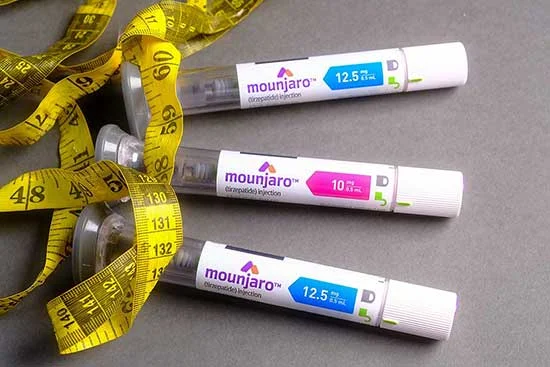
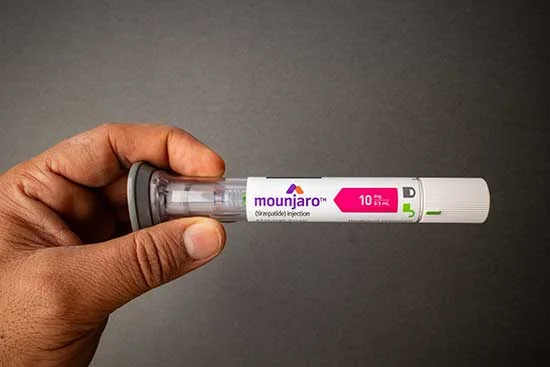
Mounjaro is available in a single-dose vial and pen, with different strengths: 2.5 mg, 5 mg, 7.5 mg, 10 mg, 12.5 mg, or 15 mg per 0.5 mL.
While FDA-approved for diabetes, many healthcare providers prescribe it for off-label weight loss because of its superior effects in promoting weight reduction.
The starting dose for Mounjaro is 2.5 mg, injected into the upper arm, abdomen, or thigh, once a week. After four weeks, the dosage increases to 5 mg, then in increments of 2.5 mg every 4 weeks, until reaching the maximum dose of 15 mg.
Phentermine is available in four forms: tablets, capsules, disintegrating tablets (Suprenza), and extended-release capsules (Qsymia). Adipex-P is the most commonly prescribed phentermine. It’s available in tablet and gelatin capsule forms, both containing 37.5 mg of phentermine hydrochloride. The recommended dose is one capsule or tablet daily, taken either before breakfast or 1-2 hours after breakfast.
Lomaira — another brand of phentermine — is available in tablet form and contains 8 mg of phentermine hydrochloride per tablet. The usual dose for adult patients is one tablet three times a day, 30 minutes before meals.
When comparing Mounjaro vs. phentermine, consider which dosing schedule best fits your lifestyle for a more convenient treatment.
Which Is More Effective for Weight Loss?

In separate studies comparing Mounjaro vs. phentermine for weight loss, Mounjaro appears to be more effective for weight loss.
One study, published in the Journal of Medicine, measured the weight loss achieved from three different doses of tirzepatide. Researchers randomized 2539 adults who were obese and overweight with one weight-related condition to receive 5 mg, 10 mg, or 15 mg of tirzepatide weekly or placebo for 72 weeks. At the start of the treatment, their mean body weight was 104.8 kg, the mean body mass index was 38, and 94.5% of them were obese.
The findings were:
-
- Those who received 5 mg of tirzepatide lost an average of 16% of their body weight, or approximately 16.1 kg.
- People who received 10 mg lost 21.4% of their weight, or about 22.2 kg.
- Those on the highest 15 mg dose lost 22.5% or roughly 23.6 kg.
- Those on the placebo lost 2.4% of their body weight, or approximately 2.4 kg.
These impressive outcomes demonstrate that tirzepatide is effective for weight loss, even though this benefit is secondary, as it was initially approved for the treatment of diabetes.
Meanwhile, in an earlier PubMed study, 68 healthy obese adults participated in a randomized trial to quantify the weight loss effects of phentermine compared to a placebo. These individuals were divided into study and control groups and received either 37.5 mg of phentermine or a placebo for 14 weeks, including a 2-week run-in period.
After the treatment period, the authors of the study found that those in the phentermine group lost an average of 6.7 kg. Their waistline also reduced by 6.2 cm or 2.4 inches. Meanwhile, the placebo group lost an average of 2-3 kg only. Overall, people lost more weight with phentermine than with a placebo.
These phentermine vs. tirzepatide studies demonstrate that tirzepatide is better for weight loss. The most likely reason is that it directly targets the appetite. As a newer dual agonist, it’s more potent and is particularly popular for causing rapid weight loss.
Side Effects and Risks
Mounjaro causes gastrointestinal side effects that include:
-
- Nausea
- Diarrhea
- Constipation
- Dyspepsia
- Abdominal pain
- Decreased appetite
- Vomiting
Although rare, it can also cause serious risks that include:
-
- Acute pancreatitis
- Severe low blood sugar
- Acute kidney injury
- Acute gallbladder disease
- Pulmonary aspiration
- Hypersensitivity reactions
- Diabetes-related vision problems
Phentermine is also associated with the following side effects:
-
- Insomnia
- Dryness of the mouth
- Unpleasant taste
- Diarrhea
- Constipation
- Nervousness or restlessness
- Palpitation
- Hives
Some people may experience serious risks affecting their heart, brain, and hormone levels. Symptoms may include:
-
- High blood pressure in the lungs
- Ischemic events that may disrupt the blood flow to the heart or brain
- Regurgitant cardiac valvular disease or a heart valve problem
- Psychosis
- Overstimulation
- Tremor
- Impotence
In most cases, side effects are manageable, especially if treatment is taken under a doctor’s supervision. If you’re evaluating phentermine vs. tirzepatide for weight loss, consider the potential side effects and how they may impact co-occurring conditions and overall health. Your doctor will also help you decide which treatment best suits your needs.
Mounjaro and Phentermine Drug Interactions
Mounjaro may interact with the following medications:
-
- Oral medications: Tirzepatide delays gastric emptying, so it may make oral medications like contraceptives less effective.
- Insulin secretagogues or insulin: They can increase the risk of severe low blood sugar levels when used in combination with Mounjaro.
Mounjaro isn’t recommended for:
-
- Pregnant women
- People with medullary thyroid carcinoma (MTC)
- People with multiple endocrine neoplasia syndrome type 2 (MEN 2)
Phentermine may interact with the following types of drugs:
-
- Monoamine oxidase inhibitors: Phentermine may increase the risk of severe high blood pressure
- Alcohol: It may worsen potential side effects.
- Insulin and oral hypoglycemics: It may also elevate the risk of low blood sugar.
- Adrenergic neuron blocking drugs: Using phentermine may reduce the hypotensive effects of these medications.
Due to serious associated risks, phentermine shouldn’t be used by:
-
- Pregnant and nursing women
- People with a history of heart disease and drug abuse
- Individuals with hyperthyroidism and glaucoma
- People in agitated states
- People with known hypersensitivity to sympathomimetic amines
- People who are using or have used monoamine oxidase inhibitors within 14 days
Experts advised not to use Mounjaro and phentermine with other weight loss medications because it’s not guaranteed to be safe.
Mounjaro vs. Phentermine Cost
Phentermine is more affordable because of its generic version, whereas Mounjaro is more expensive because it’s a newer drug.
The average cost of phentermine 37.5 mg (Adipex-P) ranges from $74.55 to $116.09 for a month’s supply of 30 tablets.
Meanwhile, a Mounjaro single-dose pen, which delivers four doses and is good for one month, costs approximately $1,159 in the U.S.
Fortunately, insurance coverage, manufacturer coupons, and pharmacy discounts can reduce your monthly medication expenses. However, they often come with eligibility requirements that you must meet. They also require paperwork, which some patients may find burdensome.
Buy Canadian Insulin (BCI) is an online prescription platform that offers up to 90% savings on branded-name medications, including Mounjaro. Regardless of insurance status, you can get your medications at much lower prices.
You can buy a Mounjaro 2.5mg/0.6mL KwikPen from only $499.97, which is almost 50% lower than the U.S. retail price of $1,159. Medications in Canada are generally more affordable than in the U.S. because drug policies are well-regulated. Regarding quality, we offer authentic and safe prescriptions that match FDA-approved formulations.
Can You Take Phentermine and Mounjaro Together?
It’s possible to take phentermine and Mounjaro together, but healthcare providers generally don’t recommend it because of the risks associated with simultaneous use.
One reason they might be combined is that they target different pathways for suppressing appetite. Mounjaro acts on two gut hormones to reduce your cravings, but this benefit is only second to its primary effect of lowering blood sugar levels. Phentermine, on the other hand, works as a stimulant to regulate appetite via the central nervous system.
They shouldn’t be used together because Mounjaro is for long-term use, while phentermine is only for short-term treatment.
Regardless, using tirzepatide and phentermine together can likely increase the risk of more intense side effects and unexpected adverse reactions. If you’re considering taking them together, consult your doctor first. They’ll determine if this combination is safe for you.
Mounjaro and Phentermine Alternatives

Your doctor may recommend alternative medications if Mounjaro or phentermine isn’t available or doesn’t suit your needs.
Top Phentermine Alternatives
-
- Contrave combines naltrexone and bupropion to target the brain’s reward center, reducing cravings.
- Qsymia: It’s a mix of phentermine and topiramate extended-release and can be used for long-term weight loss.
- Alli: It contains orlistat and is a lipase inhibitor. It works by reducing the amount of dietary fat absorbed in your intestines.
Mounjaro Alternatives
Mounjaro Works Better for Weight Loss but Costs More
In this Mounjaro vs. phentermine side-by-side analysis, Mounjaro appears to be more effective for weight loss than phentermine, but it’s also more expensive. Phentermine has generic versions sold under different brands, whereas Mounjaro is a newer medication — it received approval in May 2022. Additionally, dual agonists like tirzepatide that target GIP and GLP-1 represent a relatively new class of drugs. Researchers continue to explore their full potential for treating obesity and diabetes.
Mounjaro and phentermine each cater to the specific needs of individual patients. Visit your doctor for advice if you’re considering using either of them. They’ll examine your health history and overall condition to decide which option is the best for you.
Frequently Asked Questions
Articles you may also be interested in


Original Publish Date: 5/22/2024 – Updated 7/25/2025


