
You’ve counted the carbs, done the finger pricks, and attended the monthly half-hour doctor visits — you’re not alone. Diabetes is a chronic condition that has no cure, but a combination of lifestyle changes and medication works well in preventing dangerous spikes. Your doctor has probably mentioned brand-name drugs like Mounjaro and Trulicity or perhaps prescribed either one to you. If you’re wondering which is better for losing weight and controlling blood sugar levels, this article on Mounjaro vs. Trulicity explores the differences and similarities between these two popular diabetes treatments.
What Is Mounjaro?

Mounjaro is a prescription drug used to treat adults with Type 2 diabetes. When taken, it helps lower blood sugar levels and promotes weight loss.
Mounjaro is a new antidiabetic injection approved by the FDA only in 2022. What makes it unique from the rest is its dual effects on the gut hormones, resulting in better appetite suppression and glucose regulation.
What Is Trulicity?

Like Mounjaro, Trulicity is a prescription-only medication approved for two purposes:
-
- Treating children and adults with Type 2 diabetes
- Reducing the risk of cardiovascular complications in diabetes patients with heart-related comorbidities
The FDA approved Trulicity for these uses in 2014. Since it’s been available for over a decade, it’s one of the top choices for diabetes treatment, along with other popular medications like Ozempic.
People often compare Mounjaro vs. Trulicity vs. Ozempic since they’re similar-acting drugs widely used by people with diabetes. Each drug has its own health upsides and downsides that patients and doctors should consider when choosing the best treatment.
For instance, in this Reddit post on Ozempic vs. Mounjaro vs. Trulicity, some users claim that Mounjaro is better at reducing blood glucose. However, the side effects are often worse.
To put it briefly, every person responds differently to each medication. Mounjaro may work for some people, but not for everyone. The best choice comes down to which suits your needs and gives you the results you expect — whether it’s lowering your HbA1c levels or reducing your waistline.
Mounjaro vs. Trulicity: Similarities and Differences
This table summarizes the shared and unique features of Mounjaro and Trulicity.
| Feature | Mounjaro | Trulicity |
|---|---|---|
| Active substance | Tirzepatide | Dulaglutide |
| Drug class | GIP and GLP-1 receptor agonist (dual agonist) | GLP-1 receptor agonist |
| FDA-approved for |
|
|
| Weight loss potential | Greater weight loss in trials | Mild to moderate weight loss |
| Dosing schedule | Once weekly injection | Once weekly injection |
| Half-life | Approximately 5 days | Approximately 5 days |
| Common side effects | Nausea, vomiting, diarrhea, decreased appetite | Nausea, vomiting, diarrhea, fatigue |
| Insurance coverage | Covered for diabetes; may vary for weight loss | Generally covered for diabetes |
Active Ingredient: Tirzepatide vs. Dulaglutide
A key difference is their active substance. Mounjaro contains tirzepatide, while Trulicity has dulaglutide.
Tirzepatide is a dual agonist that acts on two gut hormones — glucagon-like peptide-1 (GLP-1) and glucose-dependent insulinotropic polypeptide (GIP) receptor agonists. Meaning, it targets both GLP-1 and GIP to suppress appetite and boost blood sugar control. Due to these dual effects, it’s generally considered more effective in promoting weight loss and regulating blood sugar than a mono-agonist like Trulicity.
The dulaglutide in Trulicity is a GLP-1 receptor agonist. When administered, it works like the natural GLP-1 hormone in the body, activating receptors in the gut to lower blood glucose.
Mechanism of Action: Dual vs. Mono-agonist
Between the two, Mounjaro has a broader mechanism of action than Trulicity because of its dual effects.
Tirzepatide binds to and activates GIP and GLP-1 receptors to reduce the amount of sugar in the blood and control your appetite. It also boosts first- and second-phase insulin secretion while lowering glucagon levels — a hormone that raises blood glucose. In simple terms, taking Mounjaro ultimately leads to better blood sugar control and weight loss.
After injection, it takes the body between 8 and 72 hours to absorb tirzepatide. This slow absorption rate allows Mounjaro to steadily regulate blood sugar levels throughout the week, preventing dangerous spikes for people with severe insulin resistance.
Trulicity works in nearly the same way as Mounjaro, except that dulaglutide only activates the GLP-1 receptor in the gut as a mono-agonist. Dulaglutide is 90% similar to human GLP-1, which allows it to imitate how native GLP-1 works, slowing down the movement of food through the stomach and regulating blood sugar levels.
Mounjaro vs. Trulicity Dosing and Dosage Form
While both are once-weekly injections, Mounjaro and Trulicity come in different dosage strengths that are customizable according to individual needs.
| Dosing information | Mounjaro | Trulicity |
|---|---|---|
| Dosage forms and strengths | Single-dose pen or single-dose vial with:
|
Single-dose pen with the following strengths:
|
| Recommended initial dose |
|
|
| Maximum dose |
|
|
Mounjaro Dosing Schedule
The suggested starting dose for Mounjaro is 2.5 mg, injected into the upper arm, abdomen, or thigh, at any time of the day, with or without food. This dose is taken for the first four weeks of treatment. From weeks 5 to 8, it’s increased to 5 mg, then by increments of 2.5 mg every four weeks until reaching the maximum dose.
If you miss a dose, you can still take it if it’s within 4 days after your last injection. Otherwise, skip it and take your next dose on your regular schedule.
Trulicity Dosing Schedule
The starting dose for adult patients is 0.75 mg, taken for four weeks. From weeks 5 to 8, it’s increased to 1.5 mg, then by increments of 1.5 mg every four weeks until the highest dose of 4.5 mg is reached.
Children with diabetes also start with a 0.75 mg dose, then increase to the maximum dose of 1.5 mg after four weeks.
Trulicity is injected in the upper arm, abdomen, and thigh at any time of day, with or without a meal. If you miss your dulaglutide shot, you can still take it, provided your next dose is more than 3 days away.
Mounjaro vs. Trulicity Side Effects

Mounjaro and Trulicity share common side effects, which include:
-
- Nausea
- Diarrhea
- Constipation
- Vomiting
- Dyspepsia
- Fatigue
- Abdominal Pain
- Decreased appetite
At least 5% of users of both drugs report experiencing these symptoms. Fortunately, they improve once the body has adjusted to the drug’s effects.
On rare occasions, a patient may develop severe side effects, including:
-
- Increased risk of thyroid C-cell tumors
- Acute pancreatitis
- Severe low blood sugar levels
- Severe gastrointestinal adverse reactions
- Diabetes-related vision loss
- Acute gallbladder disease
- Hypersensitivity reactions
- Pulmonary aspiration
Consult your doctor if you experience symptoms related to these conditions so they can adjust your treatment plan.
There is no significant difference in Trulicity vs. Mounjaro side effects, except for severity. Since Mounjaro affects two gut hormones, it may also cause more intense adverse reactions in some patients.
Mounjaro vs. Trulicity Cost
The average price of Mounjaro in local pharmacies is $399, while Trulicity can cost as high as $1,123.
If you’re insured, your benefits can help you afford your monthly prescriptions. You may also try to qualify for patient assistance and pharmacy savings programs to lower your medication expenses.
If cost is your primary concern when choosing between Trulicity and Mounjaro for long-term use, purchasing from Canadian online pharmacies may help.
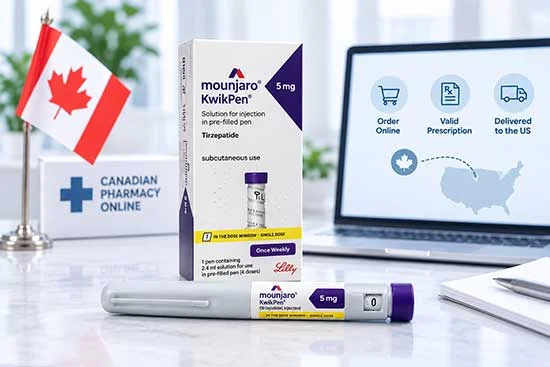
Buy Canadian Insulin is a trusted Canadian prescription platform that offers Mounjaro vials for $158.99, Mounjaro KwikPen for $499.97, and Trulicity single-dose pens for $282. You can save up to 90% by purchasing your diabetes supplies online and having them delivered to your door.
Prescriptions are more affordable in Canada because a government agency sets the maximum prices for brand-name medications. In the U.S., big pharmacies decide the price tags of Trulicity and Mounjaro based on supply and demand.
Mounjaro vs. Trulicity: Which Leads to More Weight Loss?
A study published in The Lancet, a medical journal, revealed that Mounjaro is more effective if you want to lose weight.
This study examined 636 Japanese patients with Type 2 diabetes who were randomly assigned to take 0.75 mg of dulaglutide or at least one dose of tirzepatide 5 mg, 10 mg, or 15 mg.
After 52 weeks, researchers found that those who took tirzepatide lost more weight than those who injected dulaglutide. Not only that, but a higher dose of tirzepatide resulted in more weight reduction.
-
- People who took tirzepatide 5 mg lost 5·8 kg or 7.8% of their body weight
- Those who took 10 mg lost 8.5 kg or 11% of their body weight
- Finally, those who injected 15 mg lost 10.7 kg or 13.9% of their body weight
- Participants who took dulaglutide 0.75 mg only lost 0.5 kg or 0.7% of their body weight
This Mounjaro vs. Trulicity study has proven that tirzepatide is the better choice if your priority is reducing your waistline.
Mounjaro Is Also More Effective at Lowering HbA1c Levels
The same study also evaluated Trulicity vs. Mounjaro for diabetes, assessing whether tirzepatide or dulaglutide works better at reducing average blood sugar levels or HbA1c.
The results were as follows:
-
- People who took tirzepatide 5 mg reduced HbA1c by 2.4%
- Those who took 10 mg decreased HbA1c by 2.6%
- Those who took 15 mg reduced HbA1c by 2.8%
- Participants who took dulaglutide decreased their HbA1c by only 1.3%.
Similar to the weight loss findings, the higher the dose of tirzepatide, the better it is for lowering blood sugar levels.
Drug Interactions
Both Mounjaro and Trulicity delay gastric emptying, which affects how much of your other oral medications are absorbed by your body. If you’re taking pills or tablets as a maintenance drug for a co-occurring condition, make sure you let your doctor know so they can assess the potential for interactions.
Drug Warnings
Mounjaro and Trulicity are contraindicated if you:
-
- Are diagnosed with or have a history of medullary thyroid carcinoma (MTC)
- Have multiple endocrine neoplasia syndrome type 2 (MEN 2)
- Are pregnant or lactating
In animal studies, these GLP-1 drugs have increased the risk of thyroid C-cell tumors. Hence, Mounjaro and Trulicity aren’t recommended for people at risk of thyroid issues.
Animal studies also revealed that using Mounjaro or Trulicity while pregnant could lead to fetal risks. Researchers have yet to confirm if these risks affect humans, but neither is generally recommended for use during pregnancy.
How to Switch From Trulicity to Mounjaro
Since tirzepatide is better at promoting weight loss and lowering blood glucose, your doctor may suggest switching from Trulicity to Mounjaro if it would benefit your health.
Here are some tips to consider when transitioning between medications.
- 1
Talk to Your Doctor First
Get their expert advice before making changes to your medications. They can adjust your dose and guide you on switching drugs while minimizing the risks. - 2
Keep Track of Your Blood Sugar Levels
Some people may experience unusual or more intense fluctuations in their blood sugar levels during the transition. Make sure you report this to your doctor. - 3
Monitor the Side Effects
Adverse reactions like nausea or vomiting may also worsen since Mounjaro is more potent than Trulicity. Take note of these and discuss them with your healthcare provider. - 4
Adopt a Healthy Lifestyle
You’ll get the best results with Mounjaro if you combine it with a diabetes-friendly diet and regular exercise that keeps your glucose at the lower end of the scale.
There’s no standard Trulicity to Mounjaro dose conversion chart when switching anti-diabetes drugs. Your doctor will determine your starting and maintenance dose based on your goals and tolerance to side effects.
Can You Take Trulicity and Mounjaro Together?
Both are GLP-1 drugs that serve the same purpose, so they shouldn’t be taken together. Taking Trulicity and Mounjaro together doesn’t provide extra benefits. On the contrary, it could increase stress on your organs, which can potentially result in a health complication.
Alternatives to Mounjaro and Trulicity

If the costs are a burden or you’re having trouble managing the side effects, your healthcare provider may prescribe alternative GLP-1 drugs. Common options are:
Some may consider switching from Trulicity to Ozempic — another mono-agonist — or Zepbound — a dual agonist like Mounjaro.
Mounjaro vs. Trulicity: Which Is Better Overall?
In plain terms, Mounjaro is more effective than Trulicity at promoting weight loss and regulating blood sugar levels. However, it may also cause more intense side effects because it acts on two gut hormones — GLP-1 and GIP.
Trulicity’s biggest advantage is its long-term safety data since its FDA approval in 2014. This longer track record of safety and effectiveness is important for people seeking a low-risk diabetes remedy. Since it’s been on the market for more than 10 years, insurance plans may also have better coverage for Trulicity than Mounjaro.
In summary, Mounjaro and Trulicity have their own pros and cons. Your doctor will evaluate your needs and determine which medication matches your health priorities.
Frequently Asked Questions
Articles you may also be interested in


Original Publish Date: 8/27/2023 – Updated 6/10/2025


