
Tirzepatide represents a major advance in diabetes and obesity treatment. However, its popularity has also fueled a gray market of research peptides and DIY compounding that carries serious risks. Some vendors even sell tirzepatide reconstitution kits that include bacteriostatic water, syringes, and step-by-step instructions that appear scientific, often paired with a disclaimer stating the peptides are for research use only.
These products typically do not require a prescription, bypass pharmacists, and may not even contain the ingredients listed on the label. Evidence suggests that some versions contain impurities, unknown salt forms, or contaminants, while completely avoiding the safety checks required in the FDA approval process. Regulatory agencies have repeatedly warned against the use of unapproved GLP-1 products and are now increasing enforcement efforts.
Below, we explain the gray market of research peptides and DIY tirzepatide reconstitution, what drives people to these products, why they may be unsafe, and how you can access affordable tirzepatide through safer, legitimate options.
Why are people trying DIY tirzepatide?
Several factors contribute to this DIY trend.
Cost and insurance coverage
Tirzepatide is expensive, and many insurers impose strict prior authorization criteria or exclude weight-loss medications altogether. During supply shortages in 2023-2024, many patients could not refill their prescriptions.
A Reuters investigation described how some Americans ordered bulk tirzepatide powder from overseas vendors, stored it in kitchen freezers, and mixed it with sterile water at home. These buyers traded dosing tips on social media and shared their weight-loss experiences in online forums.
For example, a Reddit user posted about dissolving 1 gram of raw tirzepatide in bacteriostatic water and sought advice about solubility.
Another home user quoted by Reuters admitted she miscalculated her dose and overdosed, describing severe flu-like symptoms after injecting too much.
Trusting “research-only” peptides
Some consumers believe research peptides are essentially the same as FDA-approved drugs and assume self-reconstitution is comparable to mixing powdered antibiotics. Vendors often use buzzwords like “peptide chain,” “lyophilized powder,” and “mix with bacteriostatic water” to sound legitimate.
Mass-marketed online as cheaper alternatives
Telehealth clinics and online pharmacies have been criticized for their aggressive advertising campaigns. In February 2026, the FDA announced it would take decisive action to restrict GLP-1 active ingredients used in non-approved compounded drugs and to crack down on misleading claims that they are equivalent to approved products.
Prior to that announcement, the agency issued warning letters to companies promoting compounded tirzepatide and semaglutide with unsupported claims. Some consumers, however, were unaware of or ignored these warnings.
Are DIY tirzepatide and research-only peptides safe?
No, they are generally not considered safe. Products sold as DIY tirzepatide or “research-only” peptides come with several risks because they are not regulated or approved for human use.
Gray-market peptides often come from overseas laboratories without proper quality control. They may be stored or shipped improperly, causing degradation. Without sterile technique, mixing and injecting these products can introduce bacteria or endotoxins that lead to local or systemic infections.
Since these products are sold outside regulated channels, there is no way to trace the source or recall them if problems arise.
The manufacturer of tirzepatide, Eli Lilly, has also tested samples and found major quality problems. Some contained impurities, others were contaminated with bacteria, and several did not contain tirzepatide at all. In one case, testing showed the product consisted only of a sugar alcohol.
A recent laboratory analysis also found that mixing tirzepatide with vitamin B12, sold by compounding pharmacies, telehealth companies, and medical spas, can trigger a chemical reaction that produces an impurity not present in approved medications. Because this byproduct has never been studied in humans, its potential effects, such as toxicity, immune reactions, or changes in how tirzepatide interacts with GLP-1 and GIP receptors, are unknown.
Some sellers claim that DIY tirzepatide kits are manufactured in “FDA-approved facilities.” However, the FDA generally approves medications and biologics rather than endorsing manufacturing facilities through marketing claims. Consumers should carefully review such statements and rely on information from the FDA, licensed healthcare providers, and regulated pharmacy channels when evaluating a product.
Concerns about patient safety have led to regulatory action in other countries as well. In May 2024, Australia banned compounded tirzepatide after a patient was hospitalized following its use.
Possible dosing errors
The US Food and Drug Administration’s Adverse Event Reporting System (FAERS) shows tens of thousands of consumer reports for tirzepatide.
A 2025 analysis reviewed a total of 65,974 tirzepatide reports retrieved from the US FAERS database and found that the most common adverse event category was dosing errors.
There were 19,461 reports of “incorrect dose administered” and another 5,044 reports of “extra dose administered.” Injection-site reactions, such as pain, redness, or bruising, also accounted for 9,849 reports.
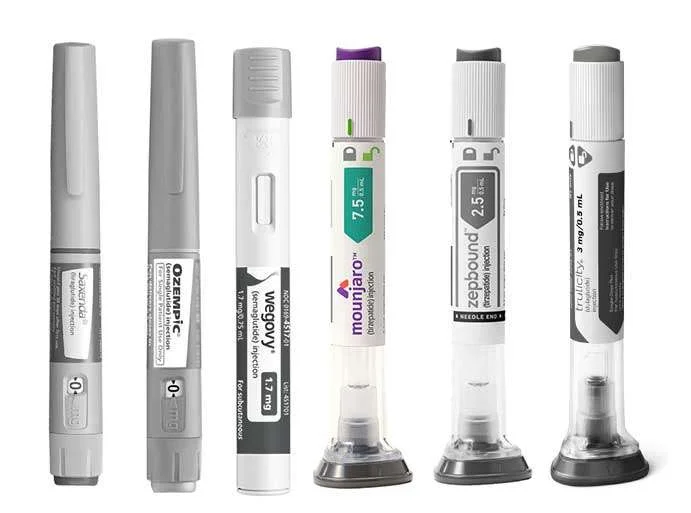
Some users misinterpret dosing instructions, like confusing milligrams with units on insulin syringes, resulting in injections five to twenty times higher than intended. Reported side effects ranged from gastrointestinal upset and fainting to pancreatitis and gallstones.
A separate FDA alert noted similar errors with compounded semaglutide and emphasised that patients lacked experience with self-injection. These warnings apply equally to tirzepatide because the injection devices and measurement challenges are similar.
Risks of mixing and reconstituting tirzepatide at home
Reconstituting tirzepatide at home might look simple in online tutorials, but the process carries real risks.
1. General reconstitution steps from peptide vendors
Vendors of research peptides often provide detailed mixing instructions. A typical guide instructs the customer to:
-
- allow the lyophilized peptide vial to reach room temperature,
- swab the rubber stopper with alcohol,
- use a sterile syringe to draw bacteriostatic water, and
- gently inject it down the side of the vial to avoid foaming.
The solution should be swirled (not shaken) until the powder dissolves. Then the reconstituted peptide must be stored in the refrigerator, and any unused portion should be discarded after a short period to prevent bacterial growth.
While these steps seem straightforward, they are designed for laboratory personnel and assume knowledge of aseptic technique and chemical handling. Vendors stress that the peptides are for research only and not for human use, but this disclaimer does little to deter self-administration.
2. Injection safety and sterile technique
Injections should never be administered with unsterile equipment or by untrained individuals. The skin should be cleaned with a 60-70% alcohol swab for at least 30 seconds before injection to minimize infection risk.
Reconstituting peptides in a kitchen or bathroom where bacteria are abundant greatly increases contamination risk. Even a small mistake, such as touching the needle, failing to swab the vial, or using non-sterile water, can introduce pathogens. Unlike physicians or nurses who follow strict protocols, DIY users may not recognize the importance of such steps.
3. Potential contaminants and biological risks
Contamination can occur at multiple points. Research peptides may be manufactured in facilities that do not adhere to Good Manufacturing Practices. They may contain endotoxins or be contaminated with bacteria or fungi.
As mentioned earlier, Eli Lilly’s testing of compounded tirzepatide mixed with vitamin B12 revealed a chemical impurity of unknown toxicity.
Without quality control testing, it is impossible to know whether a vial purchased online contains pure tirzepatide or a harmful contaminant. Even if the powder is pure initially, contamination may be introduced during reconstitution if non-sterile water or equipment is used.
Infections at the injection site can cause pain, abscesses, or systemic illness.
4. Regulatory Considerations
In addition to potential health risks, the use of unapproved peptides may involve legal and regulatory considerations. Under the Federal Food, Drug, and Cosmetic Act, certain products that have not been approved by the FDA may not be legally marketed for human use.
Some products are labeled “for research use only” or “not for human consumption.” However, these products may still be promoted online in ways that appeal to consumers seeking weight-loss or wellness treatments. The FDA has stated that unapproved GLP-1 products have not undergone the agency’s review process for safety, effectiveness, or manufacturing quality.
The FDA also advises consumers to exercise caution when purchasing unapproved or compounded products from sources that may not follow applicable regulatory requirements. Patients should discuss treatment options with a qualified healthcare provider and obtain medications through appropriately licensed healthcare and pharmacy channels whenever possible.
Where to get cheap tirzepatide?
You can get tirzepatide shipped right to your door through BuyCanadianInsulin, a trusted Canadian pharmacy partner that offers more affordable prices.
Canada has a system designed to keep medication prices reasonable. The Patented Medicine Prices Review Board (PMPRB) has overseen drug pricing since 1987. It compares Canadian drug prices with those in 11 other developed countries, including France, Germany, and the UK, to ensure they are not set excessively high.
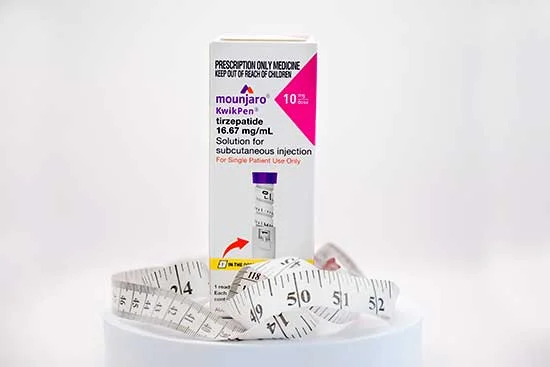
This is one reason prescription drugs, including Mounjaro and Zepbound, can often be more affordable when ordered from Canada.
Here’s how to get cheap tirzepatide:
Find Mounjaro or Zepbound on the site
Checkout
When you’re ready, go to your cart and click “Continue checkout.” Enter your contact info, shipping address, and payment details. Don’t forget to use code FIRST10 to get 10% off your first order. Once everything is filled in, click “Submit.” You’ll receive a confirmation email shortly after.
Send us your prescription
We strictly follow Canadian pharmacy regulations. A valid prescription is required for Mounjaro or Zepbound, whichever has been prescribed to you.
You can upload your prescription in one of three easy ways:
-
- Use the RX uploader tool right on the site after placing your order
- Email a clear scan or photo to info@buycanadianinsulin.com
- Fax it to 1-888-234-1275
If your prescription isn’t on file when we process your order, our team will reach out to you directly to help you complete it.
Delivery
After a licensed pharmacist reviews your order, we’ll ship it out via Canada Post Express. You’ll get a tracking number so you can follow your order all the way to your front door. Orders typically arrive in 4-10 days, and special care is taken with temperature-sensitive items to maintain their quality.
Bottom line
Work with a licensed healthcare professional. Do not purchase tirzepatide powders or mixing kits from unregulated vendors or attempt to reconstitute the medication at home. The potential harm from dosing, infection, or chemical impurities far outweighs any savings or convenience.
When you buy and inject research peptides on your own, you are essentially taking on the role of both doctor and pharmacist, which is a concern raised by patient safety advocates. It can also promote a culture where shortcuts and do-it-yourself medicine replace professional medical care.
Frequently Asked Questions
Articles you may also be interested in


Sources
Respaut, R., & Fick, M. (2025, June 27). Meet the Americans who make their own weight-loss drugs. Reuters. https://www.reuters.com/business/healthcare-pharmaceuticals/stung-by-high-prices-americans-make-their-own-weight-loss-drugs-2025-06-27/
Office of the Commissioner. (2026, February 6). FDA intends to take action against Non-FDA-Approved GLP-1 drugs. U.S. Food And Drug Administration. https://www.fda.gov/news-events/press-announcements/fda-intends-take-action-against-non-fda-approved-glp-1-drugs
Almansour, H. A., Thaibah, H. A., Alfarhan, M., Al-Qahtani, S. A., Khardali, A. A., & Alshammari, T. M. (2025). Real-World Safety Concerns of tirzepatide: A Retrospective Analysis of FAERS Data (2022–2025). Healthcare, 13(18), 2259. https://doi.org/10.3390/healthcare13182259
What are the safety concerns regarding compounded GLP-1 receptor agonists? | Drug Information Group | University of Illinois Chicago. (n.d.). https://dig.pharmacy.uic.edu/faqs/2025-2/august-2025-faqs/what-are-the-safety-concerns-regarding-compounded-glp-1-receptor-agonists/
FDA. (2024, July 26). FDA alerts health care providers, compounders and patients of dosing errors associated with compounded injectable semaglutide products. U.S. Food And Drug Administration. https://www.fda.gov/drugs/human-drug-compounding/fda-alerts-health-care-providers-compounders-and-patients-dosing-errors-associated-compounded
FDA. (2026, February 4). FDA’s Concerns with Unapproved GLP-1 Drugs Used for Weight Loss. U.S. Food And Drug Administration. https://www.fda.gov/drugs/postmarket-drug-safety-information-patients-and-providers/fdas-concerns-unapproved-glp-1-drugs-used-weight-loss
An open letter from Eli Lilly and Company warning of potential patient safety risks associated with tirzepatide compounded with vitamin B12 | Eli Lilly and Company. (n.d.). Eli Lilly and Company. https://investor.lilly.com/news-releases/news-release-details/open-letter-eli-lilly-and-company-warning-potential-patient
Dulong, C., Brett, K., & Argáez, C. (2020, March 1). Skin Preparation for Injections: A Review of Clinical Effectiveness, Cost-Effectiveness and Guidelines. NCBI Bookshelf. https://www.ncbi.nlm.nih.gov/books/NBK562932/


