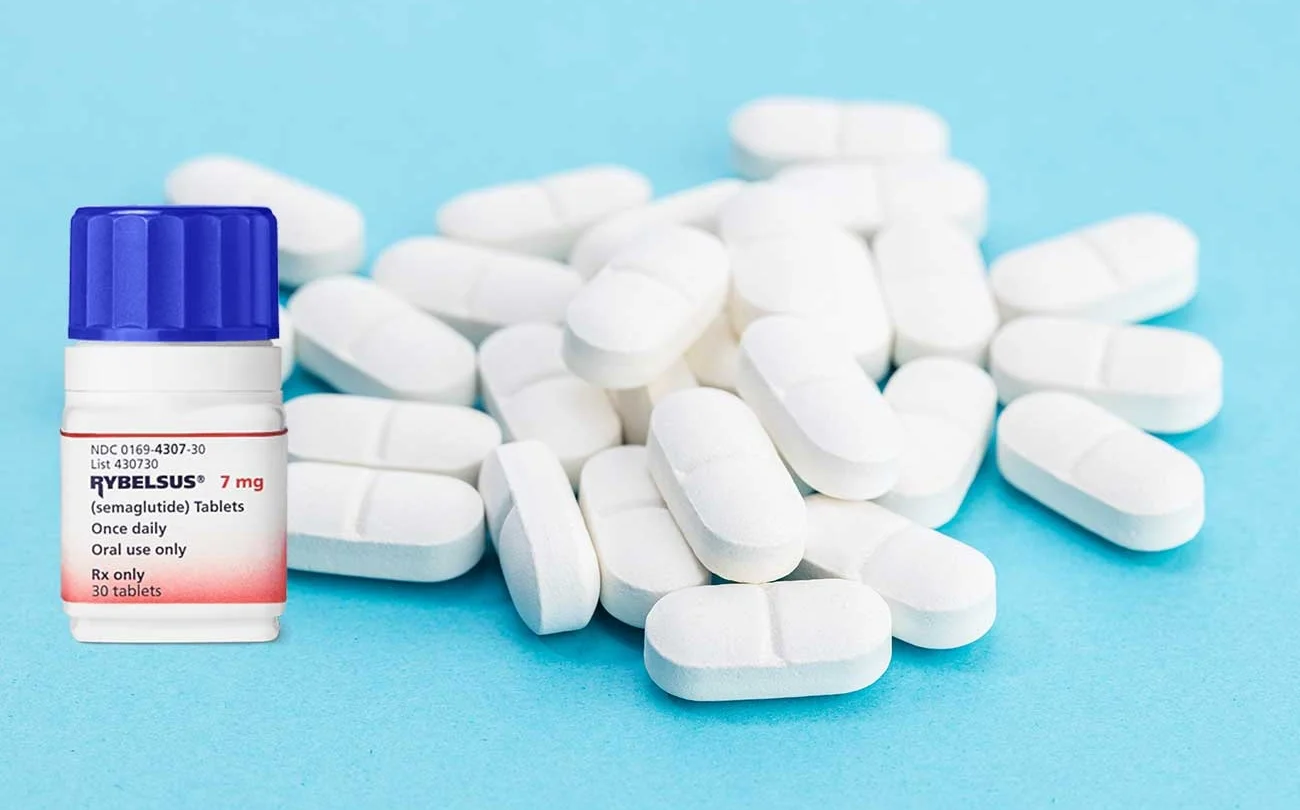
Novo Nordisk is retiring the Rybelsus brand name in favor of marketing its oral semaglutide tablet as the “Ozempic pill.” All strengths of Rybelsus, including the 14 mg dose, are being phased out and replaced by updated oral tablet equivalents, requiring patients to transition to the new branding and adjusted dosage strengths under physician guidance.
Some pharmacies may have limited Rybelsus stock as the transition progresses. Availability can vary by location. Contact your pharmacy and prescriber before your current supply runs out.
Below are oral tablet alternatives to Rybelsus for managing type 2 diabetes or supporting weight loss.
1. Ozempic tablets
Ozempic tablets are the closest product alternative for many people currently taking Rybelsus. Both contain semaglutide, but they use different formulations and are not interchangeable milligram for milligram.
According to the Rybelsus to Ozempic conversion chart, patients taking Rybelsus may switch to Ozempic tablets after completing the first 30 days of treatment. Those taking Rybelsus 7 mg can begin Ozempic 4 mg, while those taking Rybelsus 14 mg can begin Ozempic 9 mg. The first Ozempic tablet is taken the day after the final Rybelsus dose.
Similar to Rybelsus, Ozempic tablets are taken once daily on an empty stomach with up to 4 ounces of water, followed by a wait of at least 30 minutes before eating, drinking, or taking other oral medicines. The products are not interchangeable milligram for milligram, so patients need a new prescription and should follow their doctor’s instructions.
Common side effects of Ozempic tablets include:
-
- nausea
- abdominal pain
- diarrhea
- decreased appetite
- vomiting
- constipation
Semaglutide tablets carry a boxed warning concerning thyroid C-cell tumors observed in rodents. They are contraindicated in people with a personal or family history of medullary thyroid carcinoma or Multiple Endocrine Neoplasia syndrome type 2.
2. Metformin
Metformin is a widely used generic tablet for type 2 diabetes. It lowers glucose production by the liver, reduces some intestinal glucose absorption, and improves insulin sensitivity. It is available in immediate-release and extended-release forms.
Metformin can be used alone or with other diabetes medicines. It is often affordable and does not usually cause low blood sugar when taken alone. Compared to Rybelsus, metformin is generally considered weight-neutral.
Diarrhea, nausea, abdominal discomfort, and reduced appetite are common, particularly during treatment initiation. Extended-release formulations or slower dose increases may improve gastrointestinal tolerability for some patients. Kidney function must be assessed because metformin can accumulate when renal function is severely reduced. The label also carries a boxed warning for the rare but serious risk of lactic acidosis. Long-term treatment can lower vitamin B12 levels in some people.
3. Jardiance
Rybelsus and Jardiance are both daily oral prescription medications used to improve blood sugar control in people with type 2 diabetes. Approved uses of Jardiance also include heart failure, chronic kidney disease, and cardiovascular risk. This range of indications can make it relevant when a patient’s treatment plan needs to address more than A1C.
Jardiance contains empagliflozin, an SGLT2 inhibitor. It lowers blood glucose by helping the kidneys remove glucose through urine. It is taken once daily, with or without food.
Urinary tract infections and genital yeast infections are among the most common adverse effects. The medicine can also cause increased urination, dehydration, and low blood pressure. Ketoacidosis can occur, sometimes with blood glucose below the level usually expected in diabetic ketoacidosis. Kidney function, hydration, surgery plans, infection history, and ketoacidosis risk require review before treatment.
4. Farxiga
Farxiga contains dapagliflozin and belongs to the same SGLT2 inhibitor class as Jardiance. It helps the kidneys excrete glucose and is taken once daily. Similarly, it is approved for blood sugar control in adults with type 2 diabetes and has additional indications related to heart failure and chronic kidney disease.
Common adverse effects include genital yeast infections, urinary tract infections, and increased urination. Volume depletion and ketoacidosis are important risks.
5. Januvia
Januvia contains sitagliptin, a DPP-4 inhibitor. It raises the activity of incretin hormones that help regulate insulin and glucagon in response to meals. The medicine is taken once daily and can be used alone or with other diabetes treatments.
Januvia generally has little effect on body weight. It has a low risk of hypoglycemia when used without insulin or a sulfonylurea. Dose adjustment is needed for reduced kidney function.
Reported risks include pancreatitis, serious allergic reactions, severe joint pain, bullous pemphigoid, and acute kidney injury. The risk of low blood sugar rises when Januvia is combined with insulin or a sulfonylurea.
6. Wegovy tablets
Rybelsus is FDA-approved for type 2 diabetes, although some clinicians have prescribed it off-label for weight loss.
Wegovy tablets contain semaglutide and are approved for long-term weight reduction in adults with obesity or adults with overweight and at least one weight-related condition. The label also includes cardiovascular risk reduction for qualifying adults with established cardiovascular disease and obesity or overweight.
The tablets are taken similar to Rybelsus: once daily in the morning on an empty stomach with up to 4 ounces of water. Patients wait at least 30 minutes before eating, drinking, or taking another oral medicine. Treatment begins at a low dose and increases gradually to reduce gastrointestinal adverse effects.
Common side effects of the Wegovy pill include nausea, diarrhea, vomiting, constipation, abdominal pain, headache, fatigue, and indigestion. Since it contains semaglutide, Wegovy also has a boxed warning about thyroid C-cell tumors observed in rodents and shares several precautions with other semaglutide medicines, including pancreatitis, gallbladder disease, dehydration-related kidney injury, severe gastrointestinal reactions, and diabetic retinopathy complications in some people with type 2 diabetes.
7. Foundayo
Foundayo is the brand name for orforglipron. The FDA approved it in 2026 for long-term weight reduction in adults with obesity or adults with overweight and at least one weight-related health condition.
Foundayo is a small-molecule GLP-1 receptor agonist tablet. It can be taken once daily with or without food. It does not require the empty-stomach routine used for semaglutide tablets. Treatment starts at a low dose and increases in steps according to response and tolerability.
Common adverse effects include nausea, constipation, diarrhea, vomiting, indigestion, and abdominal pain. Its label carries a boxed warning about the uncertain human relevance of thyroid C-cell tumors associated with GLP-1 activity and contraindicates use in people with a personal or family history of medullary thyroid carcinoma or MEN 2.
8. Contrave
Contrave is an extended-release tablet that combines naltrexone and bupropion. It is approved for long-term weight reduction in adults with obesity or adults with overweight and at least one weight-related condition. The dose increases over the first four weeks.
Common adverse effects include nausea, constipation, headache, vomiting, dizziness, insomnia, dry mouth, and diarrhea. Contrave can raise blood pressure and heart rate. Its bupropion component carries a boxed warning about suicidal thoughts and behaviors in children, adolescents, and young adults taking antidepressants. Contrave is not approved for pediatric patients.
Contrave is contraindicated in people with uncontrolled high blood pressure, seizure disorders, bulimia or anorexia nervosa, chronic opioid use, acute opioid withdrawal, or use of another bupropion-containing medicine. It also has important interactions with monoamine oxidase inhibitors. The naltrexone component can block opioid pain medicines and may precipitate withdrawal in a person who is opioid dependent.
9. Phentermine tablets
Phentermine is a stimulant-like appetite suppressant available as generic tablets and under tablet brands such as Lomaira. However, phentermine is not a long-term substitute for Rybelsus. Its FDA approval covers short-term use, generally a few weeks, alongside calorie reduction, exercise, and behavior change.
Phentermine may be considered when a clinician wants a short-term oral treatment, and the patient’s cardiovascular and psychiatric history permits its use. It is a federally controlled substance because it has misuse and dependence potential.
Possible adverse effects include increased heart rate, higher blood pressure, palpitations, restlessness, insomnia, dry mouth, and constipation. Phentermine is contraindicated in pregnancy and in people with several conditions, including cardiovascular disease, uncontrolled hypertension, hyperthyroidism, glaucoma, agitation, a history of drug misuse, or recent monoamine oxidase inhibitor use.
Frequently Asked Questions
Articles you may also be interested in