
Rybelsus and Mounjaro are two prominent medications used in the treatment of type 2 diabetes, both offering unique mechanisms to help control blood sugar levels. As diabetes management continues to evolve, these medications are increasingly being prescribed to improve glycemic control and, in some cases, aid in weight loss. Understanding how they compare is essential for anyone looking to make informed decisions about their diabetes treatment plan. Each medication has its strengths and potential drawbacks, and finding the right option can depend on various factors like cost, convenience, and individual response to treatment.
In this article, you will learn the key differences between Rybelsus and Mounjaro, including how they work, their benefits, side effects, ease of use, cost, and which medication may be more suitable for your diabetes management.
Rybelsus vs Mounjaro
| Category | Rybelsus | Mounjaro |
| Active Ingredient | Semaglutide | Tirzepatide |
| How It Works | GLP-1 receptor agonist | Dual GLP-1 and GIP receptor agonist |
| Form | Oral tablet | Injectable |
| Dosage Frequency | Once daily | Once weekly |
| Blood Sugar Control | Effective for lowering blood sugar | Effective, with enhanced dual action |
| Weight Loss | Moderate weight loss | Greater weight loss reported |
| FDA Approval | Approved for diabetes, not weight loss | Approved for type 2 diabetes, not FDA-approved for weight loss |
| Side Effects | Nausea, diarrhea, abdominal pain | Nausea, vomiting, diarrhea, potential injection site reactions |
What Are Rybelsus and Mounjaro?
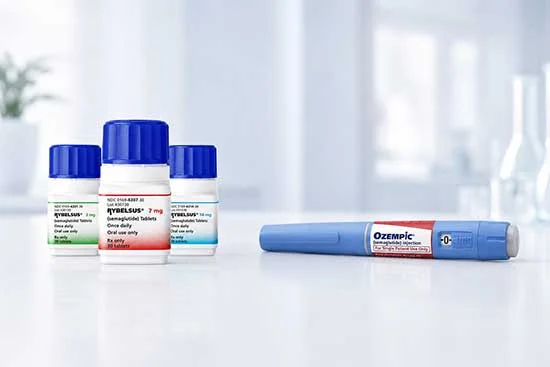
Rybelsus is an oral medication used to manage type 2 diabetes. Its active ingredient is semaglutide, a GLP-1 receptor agonist. GLP-1 receptor agonists mimic the action of the GLP-1 hormone, which helps regulate blood sugar levels by increasing insulin production and slowing digestion. Rybelsus is unique because it offers the convenience of an oral tablet, unlike most other GLP-1 medications, which are injectable.
Mounjaro, on the other hand, uses tirzepatide as its active ingredient. Tirzepatide is a dual-action medication targeting both the GLP-1 and GIP receptors. The GIP (glucose-dependent insulinotropic polypeptide) action complements the effects of GLP-1 by enhancing insulin release and reducing the release of glucagon, another hormone that raises blood sugar levels. This dual mechanism potentially makes Mounjaro more effective at controlling blood sugar and promoting weight loss than single-action drugs like Rybelsus.
How Does Rybelsus Work vs Mounjaro?
Rybelsus targets the GLP-1 receptor, mimicking the action of the GLP-1 hormone in the body. This leads to several important effects: it increases insulin production when blood sugar levels are high, decreases the amount of glucose released by the liver, and slows down digestion, which helps prevent large spikes in blood sugar after meals. By enhancing insulin release and controlling glucose production, Rybelsus effectively lowers blood sugar levels in people with type 2 diabetes.
Mounjaro has a unique dual mechanism of action, targeting both GLP-1 and GIP receptors. Like Rybelsus, it increases insulin production and reduces glucose production in the liver. However, by also acting on the GIP receptors, Mounjaro provides an additional benefit. The GIP component helps improve the body’s insulin sensitivity and enhances the effectiveness of insulin in lowering blood sugar. This dual action makes Mounjaro potentially more effective in managing blood sugar levels than single-action GLP-1 medications like Rybelsus.
The key difference is that Mounjaro’s dual GLP-1 and GIP action provides broader regulation of blood sugar, which may result in better glycemic control for some patients. Clinical data has shown that Mounjaro can lead to greater reductions in A1C levels, a long-term measure of blood sugar control, than medications that target only GLP-1 receptors like Rybelsus.
What Are the Benefits of Rybelsus vs Mounjaro?
Rybelsus and Mounjaro offer significant benefits for managing type 2 diabetes but differ in a few key areas. Here are the benefits of Rybelsus vs Mounjaro:
| Benefit | Rybelsus | Mounjaro |
|---|---|---|
| Lowers Blood Sugar (A1C Reduction) | ||
| Weight Loss | (greater weight loss) |
|
| Cardiovascular Benefits | ||
| Oral Administration | ||
| Once-Weekly Dosing | ||
| Dual Mechanism of Action (GLP-1 + GIP) | ||
| FDA-Approved for Type 2 Diabetes | ||
| Not FDA-Approved for Weight Loss |
- Both Rybelsus and Mounjaro effectively lower blood sugar and offer benefits for people with type 2 diabetes.
- Rybelsus, as an oral medication, is convenient for those who prefer pills, while Mounjaro is injectable but requires only once-weekly dosing.
- Mounjaro provides greater weight loss than Rybelsus, likely due to its dual action on GLP-1 and GIP receptors. Both medications show cardiovascular benefits and are FDA-approved for managing type 2 diabetes, though neither is specifically approved for weight loss despite showing positive outcomes in that area.
What Are the Side Effects of Rybelsus and Mounjaro?
Rybelsus and Mounjaro have potential side effects, some common and others more serious. Here’s a detailed breakdown of the side effects of each medication:
Rybelsus Side Effects
Below are some of the commonly observed side effects of Rybelsus based on clinical trials:
- Nausea: 20.2% of patients who took Rybelsus experienced nausea, compared to 6.7% in the placebo group.
- Stomach (Abdominal) Pain: 6.9% of patients taking Rybelsus reported this, while only 2.8% of placebo patients reported this.
- Diarrhea: 10.5% of patients experienced diarrhea with Rybelsus, versus 3.7% in the placebo group.
- Decreased Appetite: 8.6% of Rybelsus users reported decreased appetite, compared to 2.2% of those on a placebo.
- Vomiting: Occurred in 8.1% of patients taking Rybelsus, compared to 3.1% of placebo participants.
- Constipation: 7.4% of patients experienced constipation on Rybelsus, while only 2.6% of placebo users did.
Additional findings:
- Increases in Amylase and Lipase: Rybelsus at dosages of 7 mg and 14 mg caused increases in amylase (10% and 13%) and lipase (30% and 34%) from baseline.
- Cholelithiasis (Gallstones): Reported by 1% of patients on Rybelsus 7 mg.
- Increases in Heart Rate: Patients taking Rybelsus 7 mg and 14 mg had a mean increase of 1-3 beats per minute.
Rybelsus vs Mounjaro: Which Is Easier to Use?
Rybelsus is taken as an oral tablet, which makes it a more convenient option for people who prefer to avoid injections. The medication must be incorporated into a regular daily routine. However, it must be taken on an empty stomach with a small amount of water, and patients must wait at least 30 minutes before consuming food, beverages, or other medications. This requirement may be seen as an inconvenience for some individuals.
On the other hand, Mounjaro is an injectable medication, which might deter those who are uncomfortable with needles. However, Mounjaro only needs to be injected once a week, which provides the benefit of less frequent dosing and may appeal to individuals who prefer not to worry about daily medication. The injection is administered under the skin (subcutaneously), and some users may find the once-weekly schedule more manageable than the daily routine required by Rybelsus.
Ultimately, the choice between the two medications regarding ease of use will depend on individual preferences. Rybelsus offers the simplicity of a pill but requires daily adherence and specific timing, while Mounjaro’s weekly injection might offer more flexibility for those who prefer a less frequent dosing regimen.
Rybelsus vs Mounjaro: Which Medication Is More Effective for Diabetes?
Rybelsus was evaluated in a 6-month study involving 703 adults with type 2 diabetes. Participants who added Rybelsus to their diet and exercise regimen saw reductions in their A1C levels. Specifically, those taking 7 mg of Rybelsus experienced an average A1C reduction, and those on the 14 mg dose achieved more substantial improvements. For comparison, people who took a placebo (sugar pill) experienced only a 0.3% reduction in their A1C, and 31% of these participants reached an A1C goal of below 7%.
Mounjaro, on the other hand, has demonstrated even greater effectiveness in lowering A1C levels. In a study involving Mounjaro, patients who took the 15 mg dose achieved a reduction of up to 2.3% in their A1C. Other studies measuring glycemic control at 40 to 52 weeks showed that patients on Mounjaro achieved reductions ranging from 1.8% to 2.1% with the 5 mg dose, and 1.7% to 2.4% with both the 10 mg and 15 mg doses. This shows that Mounjaro consistently delivers substantial improvements in blood sugar control, with higher doses offering greater A1C reductions.
While both medications effectively lower blood sugar, Mounjaro provides greater A1C reductions than Rybelsus, particularly at higher doses. This may make Mounjaro a more potent option for individuals seeking more aggressive blood sugar control.
How Do Rybelsus and Mounjaro Compare for Weight Loss?
In clinical trials, Rybelsus demonstrated moderate weight loss results. In a 6-month study, participants who took the higher 14 mg dose of Rybelsus and weighed an average of 194 pounds lost around 8 pounds. Those who took the 7 mg dose and weighed an average of 196 pounds lost around 5 pounds. While this weight loss can be beneficial, it is considered more modest than other medications designed for diabetes management and weight reduction.
Mounjaro, on the other hand, has shown significantly greater weight loss potential. In the SURMOUNT-1 trial, participants lost an average of 12% to 15.7% of their body weight over 70 weeks, depending on the dosage. At the highest dose of 15 mg, some individuals experienced weight loss of up to 22.5% of their total body weight. This represents a more dramatic reduction in weight compared to Rybelsus, making Mounjaro particularly appealing for patients looking to address diabetes and obesity.
For patients with type 2 diabetes who are also focused on weight management, Mounjaro may provide a more powerful solution than Rybelsus, particularly due to its dual mechanism of action and substantial weight loss outcomes.
Rybelsus vs Mounjaro: Cost Comparison
When considering the cost of diabetes medications, the prices for Rybelsus and Mounjaro can vary significantly depending on where they are purchased and whether insurance is involved. Buying medicines without US insurance can be expensive, but purchasing through international options such as BuyCanadianInsulin.com (BCI) can provide substantial savings.
The table below compares US vs. Canadian prices for a 30-day supply of Mounjaro and Rybelsus.
| Medication | U.S. Price (30-day supply) | BCI Price | % Savings |
| Rybelsus | $935 | $297 (30 tablets) | 68% |
| Mounjaro | $1,087 | $158.99 (1 vial) | 85% |
Can You Switch Between Rybelsus and Mounjaro?
Yes, switching between Rybelsus and Mounjaro is possible, but it should be done carefully and considering several factors. Both medications work differently in terms of their mechanisms of action—Rybelsus is a GLP-1 receptor agonist, and Mounjaro acts on both GLP-1 and GIP receptors. Switching from one medication to another may involve adjusting dosages to ensure the patient achieves stable blood sugar control without experiencing significant side effects.
When transitioning from Rybelsus to Mounjaro, it is important to consider Mounjaro’s injectable form and the fact that it is administered weekly, compared to Rybelsus, which is taken orally daily. This change in the administration method can impact patient preference and compliance. Additionally, because Mounjaro has a stronger effect on blood sugar control and weight loss, patients may need to monitor for any signs of hypoglycemia (low blood sugar) after switching, particularly if other medications are involved.
Switching from Mounjaro to Rybelsus is also possible, especially for patients who prefer an oral medication or experience discomfort with injections. However, patients transitioning to Rybelsus may need more frequent blood sugar monitoring initially to ensure the medication adequately controls their levels. Rybelsus may provide less rapid and substantial blood sugar reduction than Mounjaro.
Conclusion: Which Medication Is Right for You?
Choosing between Rybelsus and Mounjaro depends on several factors, including personal preferences, treatment goals, and side effect tolerance. Rybelsus may be more suitable for those who prefer a daily oral tablet and want a simpler administration routine, but it may offer less weight loss and slightly lower blood sugar reductions compared to Mounjaro. Mounjaro, with its once-weekly injection, is a good option for patients who prefer less frequent dosing and seek stronger blood sugar control and more substantial weight loss.
Frequently Asked Questions
Articles you may also be interested in



Sources
Eli Lilly and Company. (n.d.). Mounjaro™ (tirzepatide) for healthcare professionals: A1C and weight. Retrieved from https://mounjaro.lilly.com/hcp/a1c-weight#mounjaro-a1c
Novo Nordisk. (n.d.). Rybelsus® (semaglutide): Rybelsus® results. Retrieved from https://www.rybelsus.com/why-rybelsus/rybelsus-results.html


