
If your health goal is to lose weight, you’ve probably heard of Saxenda, Wegovy, and Zepbound. These drugs are the most popular FDA-approved injectable prescriptions for people with obesity or who are overweight. Of these three, many people choose Saxenda because it’s been on the market since 2010, which means its long-term side effects, risks, and safety profiles are better understood by researchers and doctors. This article explores how Saxenda for weight loss, including its side effects, costs, and benefits beyond weight reduction.
What Is Saxenda?
| Key Facts | Saxenda |
|---|---|
| Active ingredient | Liraglutide |
| Administration | Once daily |
| Medication form | Prefilled injection pen |
| Brand names | Saxenda, Victoza (discontinued in 2024) |
| Drug class | Glucagon-like peptide 1 (GLP-1) receptor agonists |
| Starting and recommended dose | Starting at 0.6 mg per day for one week and increasing to 3 mg per day |
| FDA approved for | Chronic weight management |
| Side effects |
|
Saxenda is a prescription-only medication approved by the FDA in 2010 to treat people with obesity in combination with a calorie-restricted diet and regular exercise. It belongs to a class of drugs known as glucagon-like peptide 1 (GLP-1) receptor agonists.
It was originally approved for treating Type 2 diabetes in 2010 under the brand name Victoza. Due to its weight loss benefits, the FDA approved it for obesity and overweight treatment in 2014.
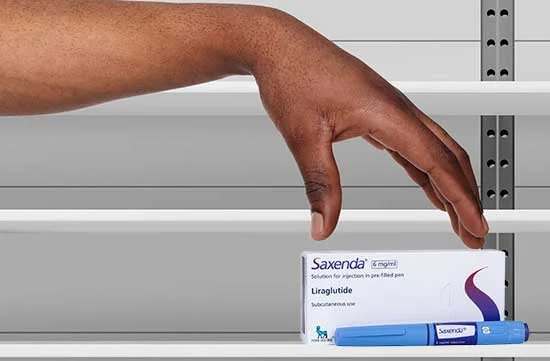
The active ingredient in Saxenda is liraglutide, which is administered by injection under the skin.
Who Is Saxenda For?

Saxenda is prescribed for adults and children who meet the following weight criteria:
Adults with a body mass index (BMI) of:
-
- 30 kg/m2 or greater (obese)
- 27 kg/m2 or greater (overweight) with at least one weight-related co-occurring condition, such as Type 2 diabetes, hypertension, and dyslipidemia
Children 12 years and older with:
-
- Body weight of more than 60 kilograms (kg)
- A BMI that corresponds to obese by adult standards
Limitations of Use
Saxenda isn’t recommended for use with other liraglutide-containing products or GLP-1 receptor agonists, like Ozempic or Wegovy. Additionally, it’s FDA-cleared for managing obesity in children — it doesn’t treat Type 2 diabetes. For pediatric patients with confirmed diabetes that co-occurs with obesity, the doctor may prescribe a different medication or adjust the treatment plan accordingly.
There is no conclusive evidence that combining Saxenda with other weight loss products or drugs is safe and effective. You must always consult your doctor if you’re taking multiple maintenance prescriptions.
Drug Interactions
Saxenda slows gastric emptying, which can interfere with other oral medications by delaying absorption. If you’re taking birth control pills or other oral medications, inform your doctor so they can adjust your treatment plan.
How Does Saxenda Help You Lose Weight?
Saxenda works by mimicking the GLP-1 hormone produced by the pancreas to lower appetite, promote feelings of fullness, and delay gastric emptying. It also influences the areas of the brain responsible for hunger signaling, helping you reduce overall calorie intake.
Saxenda is a weight loss drug, but healthcare providers don’t recommend it as a monotherapy for treating obesity. It’s often prescribed with a reduced-calorie diet and exercise. To achieve optimal weight loss with liraglutide, it must be combined with these lifestyle changes to support steady and healthy weight reduction.
Saxenda for Weight Loss Dosage and Dosing Schedule
Initially, doctors prescribe 0.6 mg per day for one week, injected in the abdomen, upper arm, or thigh at any time, with or without meals. Every week, the doctor increases the dose by 0.6 mg intervals until the recommended maintenance dose of 3 mg is reached.
Here’s a summary of the dosing schedule:
-
- Week 1: 0.6 mg (initial dose)
- Week 2: 1.2 mg
- Week 3: 1.8 mg
- Week 4: 2.4 mg
- Week 5: 3 mg (standard maintenance dose)
This dosing schedule applies to adults. For children, the doctor may adjust the dose depending on whether the side effects of an increased dose are tolerable.
Pediatric patients sometimes take eight weeks to reach the recommended 3 mg maintenance dose instead of only five weeks in adults. If common adverse reactions are challenging to manage, the doctor may reduce the standard maintenance dose to 2.4 mg in children.
Saxenda for Weight Loss: Expected Results and Timeline
In one study, patients with obesity or who were overweight with at least one weight-related comorbid condition were treated with liraglutide for 56 weeks. The weight loss results were compared with those in the placebo group.
In addition to Saxenda, which was titrated to 3 mg daily over a 4-week period, participants followed a calorie-restricted diet, reducing intake by up to 500 calories per day, along with the recommended 150 minutes of exercise per week.
The baseline mean body weight was 107.5 kg. After 56 weeks, researchers found that 62.3% of patients lost at least 5% of their body weight compared to only 34.4% in the placebo group. Additionally, 33.9% lost at least 10% of their weight compared to 15.4% with the placebo.
Based on this study, taking Saxenda in combination with a reduced-calorie diet and exercise can lead to significant weight loss.
How Much Weight Can You Possibly Lose in a Month With Saxenda?
One common question about Saxenda is whether it can cause rapid weight loss like Ozempic, a popular off-label weight loss drug. You may not notice significant weight changes during your first month of taking Saxenda. If you follow the recommended dosage titration, it’ll be in the second month that the suggested maintenance dose of 3 mg is reached. This means that you’ll take lower doses of liraglutide in your first month.
Based on the study, you may lose approximately 1-2 lbs per month over the course of a year. Weight loss results can vary for each person and depend on factors like diet, physical activity, genetics, age, and health conditions.
Saxenda Side Effects: What to Expect

Usual side effects of Saxenda include:
-
- Nausea
- Diarrhea
- Constipation
- Hypoglycemia
- Increased lipase
- Upper abdominal pain
- Vomiting
- Injection site reactions
- Headache
- Abdominal pain,
- Increased lipase
- Upper abdominal pain
- Pyrexia
- Gastroenteritis
- Dyspepsia
- Fatigue
- Dizziness
Common side effects of Saxenda for weight loss often subside after a few weeks. If they persist, you can request to adjust the dose or switch to a similar-acting prescription like Zepbound.
Severe adverse reactions may also occur, including:
-
- Increase in heart rate
- Thyroid C-cell tumors
- Acute gallbladder disease
- Pulmonary aspiration
- Acute pancreatitis
- Renal impairment
- Hypoglycemia
- Hypersensitivity reactions
- Suicidal behavior and ideation
Schedule a consultation right away if you notice symptoms associated with these severe conditions.
Saxenda Costs
The retail price of an 18 mg/3 mL prefilled injection pen of Saxenda in the U.S. starts from $1,450.10, good for six days if you take the standard daily maintenance dose of 3 mg daily.
Saxenda can be expensive for people paying out of pocket. Patient assistance and manufacturer savings programs may help make it more affordable. However, these offers often have eligibility requirements or criteria you must meet.
Another way to afford Saxenda is to buy it from online Canadian prescription delivery platforms like Buy Canadian Insulin. It’s widely known that medications in the U.S. are the most expensive in the world because their cost is based on supply and demand. In Canada, drug prices are regulated to prevent pharmaceutical companies from overpricing medications, even when demand is high.
You can purchase five prefilled pens of Saxenda 6 mg for $515 from Buy Canadian Insulin. For more than half the U.S. retail price, you get 30 mg of liraglutide, a 10-day supply if you take the 3 mg maintenance dose daily.
That’s not all – you can also get an additional 10% off your prescription using the coupon code FIRST10 upon checkout for first orders, saving you an extra $51.
Insured or not, you can save a lot by buying your medications from trusted online Canadian pharmacies. Save up to 90% of your prescriptions by using a Saxenda coupon today.
Additional Benefits of Saxenda Apart From Weight Loss
What is Saxenda used for other than managing weight? Using it can also improve blood sugar control in people with prediabetes and diabetes.
In a clinical trial that investigated patients with Type 2 diabetes, participants treated with Saxenda for 56 weeks reduced their HbA1c levels by 1.3% from a baseline of 7.9%, demonstrating its benefits for blood sugar control.
Saxenda may also have potential cardiovascular benefits linked to weight loss. In one study, researchers followed 9,340 patients with diabetes and at high risk for heart disease for 3.5 years to determine if taking 1.8 mg liraglutide could help reduce heart problems.
The findings revealed no increased risk of cardiovascular events with liraglutide use, suggesting the medication may help lower the risk of serious heart problems in diabetes patients.
Saxenda Can Support Weight Loss and Much More
Saxenda is an effective weight-loss drug when combined with a reduced-calorie diet and regular physical exercise. Its appetite-suppressing effects can help patients with high body mass index lose excess weight to improve their overall health.
Besides weight reduction, Saxenda can lower blood sugar levels in people with Type 2 diabetes. It also has potential heart benefits due to weight loss.
Before starting Saxenda, consult your doctor to determine whether it is appropriate for your needs. If you want to save on your prescriptions, Buy Canadian Insulin offers safe and affordable medications to help you support your health goals. Get an extra 10% off on your order today.
Frequently Asked Questions
Articles you may also be interested in



Original Publish Date: 12/14/2020 – Updated 5/14/2025


