
You’ve probably come across body transformation stories of your favorite Hollywood celebrities while scrolling through your social media. Although they may deny it, many celebrities who have slimmed down rapidly are believed to be using weight loss drugs such as Saxenda and Ozempic. Ozempic is currently Hollywood’s most talked-about weight loss hack — but what about Saxenda? How do they differ? If you also want to lose weight, this guide comparing Ozempic and Saxenda will help you decide which might be a better fit for your health goals.
Is Saxenda the Same as Ozempic?
Saxenda and Ozempic are not the same medication, although they belong to the same class of drugs, known as GLP-1 receptor agonists. They work the same way inside the body, but contain different active ingredients, which is one of their key differences.
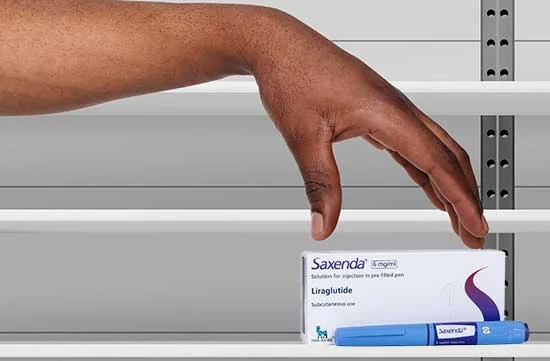
Saxenda contains liraglutide and is approved for weight loss in adults and children at least 12 years old with a high body mass index (BMI) that falls within the obese category.


Ozempic contains semaglutide and is approved for the treatment of Type 2 diabetes. It’s often recommended for off-label weight loss, especially in those who are overweight and have a high risk for insulin resistance.
While both have similar mechanisms of action, they’re not interchangeable. If you’ve been struggling with obesity for a long time and think Saxenda or Ozempic can help you achieve your health goals, speak with your healthcare provider about treatment. They’ll determine which option is most appropriate for your needs.
Similarities and Differences
Below is a table that compares the similarities and differences between Saxenda and Ozempic.
| Feature | Saxenda | Ozempic |
|---|---|---|
| Active ingredient | Liraglutide | Semaglutide |
| Drug class | GLP-1 receptor agonist | GLP-1 receptor agonist |
| FDA approval purpose | Weight management | Type 2 diabetes (used off-label for weight loss) |
| Dosing frequency | Daily injection | Weekly injection |
| Maximum dose | 3 mg daily | 2 mg weekly (for diabetes) |
| Side effects | Nausea, diarrhea, vomiting, injection site reactions, hypoglycemia | Nausea, vomiting, diarrhea, abdominal pain, and constipation |
| Drug interactions | May interact with other oral medications when used together | Same as Saxenda |
Dosing Schedules and Administration
When comparing both injectable medications, consider which one suits your lifestyle better in terms of dosing schedules.
| Feature | Saxenda (Liraglutide) | Ozempic (Semaglutide) |
| Starting dose | 0.6 mg once daily | 0.25 mg once weekly |
| Injection frequency | Daily | Weekly |
| Dose adjustment period | Weekly | Every 4 weeks |
| Titration schedule | Increase weekly: 0.6mg 1.2mg 1.8mg 2.4mg 3mg | Increase after 4 weeks: 0.25mg 0.5mg 1mg 2mg |
| Target maintenance dose | 3 mg once daily (by week 5) | 0.5 mg or 1.0 mg once weekly (2 mg for some) |
| Time to reach max dose | 5 weeks | 8-16 weeks (depending on the patient’s tolerance) |
Saxenda is injected in the abdomen, upper arm, or thigh once daily at your most convenient time, with or without meals. The initial dose is 0.6 mg per day for one week. The dose increases weekly in 0.6 mg increments until the standard maintenance dose of 3 mg is reached in week 5 of treatment.
Ozempic is injected weekly at any time of the day in the same body areas with or without meals. The recommended initial dose is 0.25 mg, which should be taken for four weeks. The dose increases to 0.5 mg in the second month, 1 mg in the third month, and 2 mg in the fourth month. Depending on how well you tolerate the side effects, your physician will determine whether to keep you on 1 mg or 2 mg as a maintenance dose.
During treatment, your healthcare provider works closely with you to monitor side effects and tailor the treatment plan to your specific needs and goals.
Which Is More Effective for Weight Loss?

No head-to-head study has directly compared both drugs for weight loss. However, separate clinical trials have revealed that Ozempic tends to cause more weight loss than Saxenda.
Saxenda Users Dropped 8.4 kg in 56 Weeks
One study involved 3,731 participants who weighed approximately 106 kg and had an average BMI of 38.3 kg/m², which falls within the range of obesity. Researchers randomly gave them a liraglutide (Saxenda) 3 mg dose or a placebo.
After 56 weeks, people on liraglutide lost an average of 8.4 kg (18.5 lbs). In contrast, those in the placebo group lost only 2.8 kg (6.2 lbs).
Ozempic Users Lost 15.3 kg in 68 Weeks
Meanwhile, a different study examined the effects of semaglutide for weight loss by enrolling 1,961 adults who were obese or overweight but didn’t have diabetes. They were also randomly assigned into two groups — the first group took semaglutide (Ozempic), while the second group took a placebo.
After 68 weeks, people who received weekly semaglutide injections lost 14.9% of their body weight while those on placebo lost only 2.4%. On average, those on semaglutide lost 15.3 kg, or approximately 33.7 lbs, whereas those on the placebo lost only 2.6 kg, or 5.7 lbs.
Although the study timeframe for semaglutide is longer, the outcomes suggest that Ozempic tends to be more effective for weight loss. One reason is that semaglutide is more potent and has a longer half-life, approximately one week. Liraglutide, the active ingredient in Saxenda, has a half-life of 13 hours. It’s also administered once a week, making it more convenient for busy individuals.
One advantage of Saxenda is that it causes milder stomach-related side effects than Ozempic. People who are sensitive to gastrointestinal issues may prefer to use Saxenda.
Side Effects and Safety Considerations

Side effects are normal for any medication. Saxenda and Ozempic share some common side effects that include:
-
- Nausea
- Abdominal pain
- Constipation
- Vomiting
- Diarrhea
- Injection site reactions
- Fatigue
- Dizziness
At least 5% of patients using Saxenda or Ozempic may experience these adverse reactions. Fortunately, they subside over time as your tolerance to the drug increases. In most cases, they’re not cause for concern.
Although rare, severe side effects may also happen. They include:
-
- Pancreatitis
- Diabetes-related vision impairment
- Severe low blood sugar
- Acute kidney injury
- Hypersensitivity reactions
- Acute gallbladder disease
Inform your healthcare provider immediately if you experience signs related to these conditions.
Saxenda users should be aware of potential symptoms related to suicidal ideation and pulmonary aspiration. Clinical trials have shown that patients taking Saxenda may experience depression or suicidal thoughts. They may also experience difficulty breathing due to pulmonary aspiration.
The severity of these common and serious side effects varies from person to person. Some people who’ve tried other GLP-1 drugs previously may not feel any side effects when switching to Saxenda or Ozempic, while others may experience moderate nausea or vomiting.
When choosing a weight loss medication, it pays to do more research on Saxenda vs Ozempic side effects, specifically in forum sites like Reddit, and learn what people are saying about these medications.
Cost Comparison and Insurance Coverage
Saxenda comes in a prefilled pen that costs around $1,640 in the U.S. Meanwhile, an Ozempic injection pen may cost slightly less at $1,203.
Branded medications in the U.S. can easily cost upwards of $1,000 unless you have insurance that can help cover your monthly medication expenses.
Patient assistance programs, manufacturer savings cards, and pharmacy coupons can make your medications affordable. However, you must meet certain eligibility requirements, such as income levels or residency, and may also require documentation.
If you’re uninsured or underinsured, one way to afford your medications is to purchase from Canadian pharmacies, where medications are typically more affordable.
Buy Canadian Insulin is an online prescription platform that has helped thousands of Americans improve their health by making brand-name medications affordable.
At Buy Canadian Insulin, you can purchase a Saxenda prefilled pen for $515, which is $1,125 less than its average retail price in the U.S. of $1,640, and an Ozempic pen for $329.95, which is $773 less than its average retail price in the U.S. of $1,203.
This can save you over 50% on prescriptions. A more cost-effective medication means you can stay consistent with your treatment and get the results you expect, whether it’s weight loss or better blood sugar control.
Similar Medications (Wegovy, Mounjaro, Zepbound)
Medication shortage is an ongoing issue in many states, partly because of the skyrocketing demand for weight loss drugs.
In August 2022, the FDA announced the shortage of semaglutide injection products, including Ozempic. In February 2025, the agency made another announcement that the supply problem had been resolved. Although this is the case, some pharmacies may still not have Ozempic pens readily available for patients.
Local pharmacies may also be experiencing a shortage of Saxenda due to supply chain issues and increased demand for it. When availability becomes an issue, your physician may prescribe similar drugs to Ozempic or Saxenda. Some options include:
- Wegovy: Contains semaglutide and is approved for weight loss
- Mounjaro: Contains tirzepatide and is cleared for type 2 diabetes
- Zepbound: Also contains tirzepatide and is approved for anti-obesity
When changing medications, your healthcare provider will determine which alternative best suits your needs and goals.
Saxenda vs Ozempic: Which Is Better?
It comes down to what works best for you. Saxenda and Ozempic have their own upsides and downsides. For example, Ozempic may cause you to lose more pounds than Saxenda, but it may also likely cause more intense side effects due to the potency of semaglutide. If you’re looking for a slow and steady way to slim down with fewer side effects, Saxenda might be a more suitable option.
Apart from your tolerance to the side effects, your lifestyle, medical history, and budget are all things to consider when choosing between Saxenda and Ozempic. If neither is available, your doctor may recommend alternatives, such as Wegovy or Mounjaro.
Talk with your healthcare provider about your health goals, and they’ll help you find the best weight loss medication that suits you.
Frequently Asked Questions
Articles you may also be interested in



Original Publish Date: 10/26/2024 – Updated 7/04/2025


