
If you’re deciding between conventional insulin and a newer antidiabetic drug, which would you choose? Two of the best options for managing blood sugar levels are insulin glargine, a long-acting insulin, and tirzepatide, a dual agonist. Each comes with unique benefits and drawbacks. To determine which treatment is more effective, this article compares the glucose-lowering effects of tirzepatide versus insulin glargine, including their side effects and costs.
What Is Tirzepatide?
Tirzepatide is the active ingredient in two popular brand-name medications — Mounjaro and Zepbound. Mounjaro is approved for the treatment of Type 2 diabetes, while Zepbound is approved for weight management.
Tirzepatide is a dual agonist that binds to both glucagon-like peptide-1 (GLP-1) and glucose-dependent insulinotropic polypeptide (GIP) receptors, suppressing appetite and managing blood sugar levels.
Tirzepatide is currently used as a second-line agent for treating diabetes, specifically when the first choice, metformin, isn’t enough. Clinical trials conducted on both Mounjaro and Zepbound have demonstrated tirzepatide’s superior efficacy in promoting weight loss and lowering HbA1c levels.

What Is Insulin Glargine?
Insulin glargine is available in several brand-name medications, including Lantus, Semglee, Basaglar, Toujeo, and Rezvoglar. It belongs to a class of drugs known as long-acting insulin analogs, providing basal glucose coverage throughout the day. It’s often combined with rapid-acting insulins, such as insulin lispro, for optimal glucose control.
Insulin glargine is approved by the FDA for treating children and adults with Type 1 diabetes and adults with Type 2 diabetes. Clinical trials have shown that when combined with rapid-acting insulin, it can help prevent blood sugar spikes and diabetes complications.
People often compare tirzepatide versus insulin glargine. Most will agree that newer drugs, such as tirzepatide, are generally more effective than traditional insulin therapies. However, insulin glargine offers unique benefits that can’t be found in tirzepatide — for instance, broader insurance coverage.

Tirzepatide versus Insulin Glargine: Differences in Features
Below is a table summarizing the key distinct features of both antidiabetic drugs.
| Feature | Tirzepatide (Mounjaro/Zepbound) | Insulin Glargine (Lantus/Basaglar/Semglee) |
|---|---|---|
| Drug Class | Dual incretin receptor agonist (GIP + GLP-1) | Long-acting basal insulin analog |
| Active Substance | Tirzepatide | Insulin glargine |
| Brand Names | Mounjaro (diabetes), Zepbound (weight loss) | Lantus, Basaglar, Semglee, Toujeo, Rezvoglar |
| FDA Approval | Type 2 diabetes, Obesity | Type 1 diabetes (adults and children) and Type 2 diabetes (adults only) |
| Mechanism of Action | Enhances insulin release, suppresses appetite, slows digestion | Mimics human insulin, increases glucose uptake |
| Dosing Frequency | Once weekly | Once daily |
| Route of Administration | Subcutaneous injection (abdomen, thigh, upper arm) | Subcutaneous injection (abdomen, thigh, upper arm) |
| Half-life | 5 days | 24 hours |
| Common Side Effects | Nausea, vomiting, decreased appetite, constipation, diarrhea | Hypoglycemia, weight gain, rash, injection site reactions |
| Serious Risks | Pancreatitis, gallbladder disease, vision changes, kidney injury | Severe low blood sugar, hypokalemia, fluid retention |
| Weight Impact | Promotes significant weight loss | May cause weight gain |
| Insurance Coverage | Limited for some plans (newer drug) | Widely covered due to long-standing use |
| Availability of Generics | No (brand-name only) | Yes (biosimilars like Basaglar, Semglee) |
| Average U.S. Price | ~$1,159 for Mounjaro | ~$550 for Lantus pens, ~$399 for Basaglar |
| Canadian Price (via BCI) | ~$499.97 for Mounjaro | ~$114–$177 for Lantus; ~$115 for Basaglar |
| Best For | Patients needing both blood sugar and weight control | Patients needing basal insulin, especially with Type 1 diabetes |
Each drug suits different patient needs. Learn the seven key differences between tirzepatide and insulin glargine.
Mechanism of Action: How Long Do They Work?
Tirzepatide acts on two gut hormones, often referred to as “twincretin.” As a GLP-1 agonist, it mimics the native GLP-1 to regulate appetite and slow down the pace at which food moves through the stomach. As a result of these benefits, you feel fuller for longer, consequently reducing your calorie intake. As a GIP agonist, it boosts insulin secretion by stimulating the pancreas to release insulin when your blood sugar levels are high, preventing harmful spikes.
As a dual incretin receptor agonist, tirzepatide can boost the effects on glucose control and weight loss in people with diabetes or chronic weight disorder. Tirzepatide has a half-life of approximately five days, meaning a once-weekly injection is enough to provide blood sugar coverage for the entire week.
Insulin glargine also provides extended blood sugar coverage, but not as long as tirzepatide. Its duration of action lasts up to 24 hours, offering all-day and all-night support to control blood sugar. Its effects subside after 24 hours, requiring you to inject the medication daily.
Insulin glargine begins to work within 1.5 to 2 hours after it’s injected under the skin. The drug forms tiny crystals that release insulin slowly into the bloodstream, managing glucose levels between meals and throughout the night. Insulin glargine doesn’t have a peak because it’s formulated to work slowly and steadily.
To summarize this section, tirzepatide suppresses appetite and slows digestion to control blood sugar levels. Insulin glargine is a synthetic form of human insulin. It works like native insulin by increasing the cells’ ability to take up glucose.
Dosing: When to Take and Where to Inject
The dosing schedule and method of administration are important factors when choosing between tirzepatide and insulin glargine.
Tirzepatide Dosing Information
Tirzepatide is injected under the skin in the upper arm, thigh, or abdomen. It’s taken once weekly at any time of day, with or without meals.
It’s available in the following strengths:
-
- 2.5 mg/0.5 mL
- 5 mg/0.5 mL
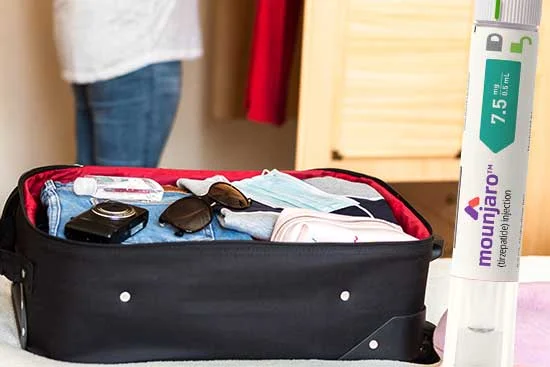
- 7.5 mg/0.5 mL
- 10 mg/0.5 mL
- 12.5 mg/0.5 mL
- 15 mg/0.5 mL
Tirzepatide is medically cleared for both diabetes (Mounjaro) and obesity (Zepbound). Their recommended standard dosing schedule is identical.
| Weeks | Tirzepatide for diabetes (Mounjaro) | Tirzepatide for weight loss (Zepbound) |
| Weeks 1-4 (initial dose) | 2.5 mg once weekly | 2.5 mg once weekly |
| Weeks 5-8 | 5 mg once weekly | 5 mg once weekly |
| Weeks 8-12 | 7.5 mg once weekly | 7.5 mg once weekly |
| Weeks 13-16 | 10 mg once weekly | 10 mg once weekly |
| Weeks 17-20 | 12.5 mg once weekly | 12.5 mg once weekly |
| Weeks 20-24 (maximum dose) | 15 mg once weekly | 15 mg once weekly |
The doctor usually increases the dose every four weeks, unless you experience uncomfortable side effects. When this happens, your healthcare provider may lower your maintenance dose to ease the symptoms.
Insulin Glargine Dosing Information
Like tirzepatide, insulin glargine is injected under the skin in the abdominal area, the deltoid, or the thigh. It’s administered once daily at your most convenient time, but at the same time every day — for instance, every 8 a.m. daily.
Insulin glargine is often available in 100 mL vials or dosing pens containing 3 mL cartridges of solution. The dose is highly individualized and depends on factors like the type of diabetes and prior insulin use. The doctor adjusts the dose as needed to meet your current health needs.
The estimated starting dose is usually 0.4 to 0.5 units/kg per day of total insulin. Insulin glargine is used in combination with rapid-acting insulin, like Humalog, for optimal blood sugar control.
Doctors may adjust the doses and treatment plan for both tirzepatide and insulin glargine.
Promoting Weight Loss: Which Is More Effective?
All types of insulin have anabolic effects. Insulin glargine helps the liver cells collect glucose from the blood and store it as fat in the adipose tissue or as an energy reserve in the liver or muscles that you can use in the future. Due to its mechanism of action, insulin can promote weight gain. If you use Lantus, a brand of insulin glargine, you may experience weight gain as a side effect.
However, when insulin glargine is added to tirzepatide, weight gain can be mitigated, as shown in the SURPASS-5 trial.
In this study, researchers examined the effects of tirzepatide versus placebo on patients with diabetes who were already taking insulin glargine to manage their condition. A total of 475 adults with Type 2 diabetes were randomized to take tirzepatide 5 mg, 10 mg, 15 mg, or a placebo. The findings were as follows:
-
- Participants on 5 mg tirzepatide lost 5.4 kg
- Participants on 10 mg lost 7.5 kg
- Those on 15 mg lost 8.8 kg
- Those who received a placebo gained 1.6 kg of body weight
Patients who received a placebo ended up gaining weight, likely due to the anabolic effects of insulin. Meanwhile, people who took the 15 mg dose of tirzepatide, the highest dose, lost 10.5 kg compared to those who took the placebo.
To summarize, tirzepatide can help negate weight gain associated with insulin if used simultaneously. The SURPASS-5 study demonstrates tirzepatide’s effectiveness for weight loss.
Articles you may also be interested in


Managing Diabetes: Which Lowers HbA1c Better?
Tirzepatide is considered more potent than insulin in its effects on blood sugar levels.
In the same SURPASS-5 trial, people who received tirzepatide 10 mg and 15 mg reduced their HbA1c — or average blood sugar levels — by 2.40% and 2.34%, respectively. Those on placebo saw a decrease of only 0.86% in their HbA1c levels.
In contrast, 562 people with Type 2 diabetes were treated with insulin glargine for 24 weeks. After the treatment period, they decreased their HbA1c by 0.91%. Although a meaningful improvement, the glucose-lowering effects of tirzepatide prove to be more robust than insulin.
In two studies examining the effects of tirzepatide versus insulin glargine for diabetes, tirzepatide demonstrated superior effects in maintaining steady blood sugar levels.

Tirzepatide Versus Insulin Glargine: Side Effects
Both medications cause common and serious risks.
Common Side Effects
In the clinical trials conducted on Mounjaro, which contains tirzepatide, at least 5% of users reported the following common side effects:
-
- Nausea
- Diarrhea
- Constipation
- Dyspepsia
- Abdominal pain
- Decreased appetite
- Vomiting
Conversely, patients who use insulin glargine may experience the following common side effects.
-
- Weight gain
- Hypoglycemia
- Allergic reactions
- Pruritus
- Rash
- Edema
- Injection site reactions
- Lipodystrophy
These typical symptoms often appear during the first few weeks of treatment as the body adjusts to the medication, but they improve over time.
Serious Risks
Using tirzepatide is associated with rare yet serious side effects that include:
-
- Pancreatitis
- Severe low blood sugar
- Hypersensitivity reactions
- Acute kidney injury
- Diabetes-related vision loss
- Severe gastrointestinal disease
- Acute gallbladder disease
Meanwhile, insulin glargine may increase the risk of the following serious side effects:
-
- Severe low blood sugar
- Severe high blood sugar
- Hypersensitivity reactions
- Severe low potassium levels
- Fluid retention and heart failure
Side effects are typical for most medications. However, inform your doctor immediately if you experience persistent or worsening symptoms so that they can investigate the underlying cause.
Cost: Which Is More Cost-effective?
Insulin glargine is a biologic and has biosimilar versions, which are akin to generic versions of biologics. They include Basaglar and Semglee, which are more affordable than Lantus — a brand-name drug that also contains insulin glargine. In contrast, tirzepatide has no generic form. It can be expensive for those without insurance.
Brand-name medications in the U.S. are often priced steeply. Here are the average costs of insulin glargine and tirzepatide in the U.S. and Canada, allowing you to compare the potential savings by purchasing from online Canadian pharmacies.
| Medications | Average prices in the U.S. | Price in Canada |
|---|---|---|
| Lantus Solostar pens | $550 | $177 |
| Lantus cartridges | $550 | $177 |
| Lantus vials | $338 | $114 |
| Basaglar KwikPens | $399 | $115 |
| Mounjaro KwikPens | $1,159 | $559.99 |
| Zepbound KwikPens | $1,159 | $559.99 |
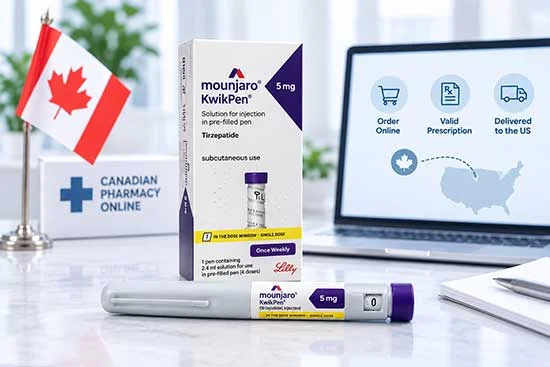
Online prescription platforms, such as Buy Canadian Insulin (BCI), allow you to save up to 90% on your medications. Even if you’re uninsured or are paying out of pocket, BCI offers reasonably priced antidiabetic drugs to help you afford your medications without compromising your treatment. If you order from BCI, you can get an extra 10% off using the coupon code FIRST10.
Alternative options: Switching to Related Therapies
Doctors may recommend an alternative medication if you experience troublesome side effects or your insurance provider doesn’t cover insulin glargine or tirzepatide.
Alternatives to Insulin Glargine
-
- Insulin detemir (Levemir): It’s also a long-acting insulin that provides basal coverage. It may require twice-daily dosing for patients with poor blood sugar control.
- Insulin degludec (Tresiba): It’s an ultra-acting insulin that provides background coverage for up to 42 hours.
- Insulin lispro mixture (Humalog Mix 75/25): This is a premixed insulin product that combines intermediate-acting and rapid-acting insulin to provide both bolus and basal coverage in a single injection. It’s typically administered twice daily.
Alternatives to Tirzepatide
-
- Semaglutide (Wegovy, Ozempic): It’s a mono-agonist approved for diabetes (Ozempic) and weight loss (Wegovy).
- Dulaglutide (Trulicity): It’s approved for treating Type 2 diabetes and is also a GLP-1 agonist like semaglutide.
- Liraglutide (Victoza, Saxenda): It’s also approved for Type 2 diabetes (Victoza) and weight loss (Saxenda), but requires daily injection.
If a change is needed, some patients choose to switch from tirzepatide to semaglutide, particularly Ozempic, for its impressive effects on improving glycemic control and promoting weight loss.
There’s no equivalent dose conversion when switching from tirzepatide to semaglutide. When you restart treatment with a different drug, your doctor will likely begin with the lowest dose of Ozempic or another alternative and follow the standard titration schedule to mitigate the side effects.
Tirzepatide Versus Insulin Glargine: Which Is Right for You?
The primary advantage of insulin therapies is their extensive safety data that spans decades. Even if they’re considered less effective as GLP-1 agonists, they’ve been proven safe for long-term use. They also have broader insurance coverage — patients worry less about their medication costs since companies typically cover insulin injections for diabetes.
Tirzepatide promotes weight loss and reduces average blood sugar levels more quickly than insulin glargine. However, many patients are concerned about its cost. Without insurance, Zepbound or Mounjaro pens can cost over $1,000 per month. Insurance coverage for newer GLP-1 medications, such as tirzepatide, remains limited due to formulary restrictions.
Work with your doctor to determine the treatment that suits your health goals, lifestyle, and preferences. To avoid compromising your treatment, consider which option is financially sustainable and widely accessible.
Frequently Asked Questions
Original Publish Date: 1/03/2024 – Updated 7/19/2025


